Introduction
Most DTC brands pour their budget into paid ads, chase new customers, and then watch those buyers disappear after the first order. The revenue sitting in their existing customer base? Largely untouched.
Campaign management is the system that captures it.
Done well, it turns one-time buyers into repeat customers through structured, consistent marketing across email and SMS. Done poorly — or not at all — it leaves retention revenue on the table while acquisition costs keep climbing.
This guide covers what campaign management actually means, the core components that make it work, how to run a campaign from start to finish, and the campaign types that deliver the highest ROI for DTC brands.
Key Takeaways:
- Campaign management is a coordinated system that aligns messaging, timing, and audiences — not a one-off tactic
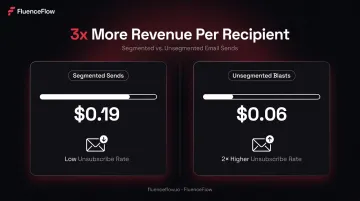
- Segmented sends generate $0.19 revenue per recipient vs. $0.06 for unsegmented blasts
- Automated lifecycle emails drive 37% of email sales from just 2% of send volume
- Retention-focused campaigns (email/SMS) consistently outperform acquisition channels on ROI
- Revenue per recipient, not open rate, is the most useful metric for comparing campaign performance
What Is Campaign Management?
Campaign management is the end-to-end process of planning, executing, tracking, and optimizing marketing campaigns to hit specific business goals. It's not a single tactic — it's the operational system that keeps messaging, timing, channels, and audiences coordinated.
Strategy vs. Execution
Marketing strategy sets the direction: drive repeat purchases, reduce churn, win back lapsed customers. Campaign management is how that actually happens — the scheduling, segmentation, sending, and measurement that turns a goal into revenue.
A DTC brand selling premium skincare might decide to re-engage dormant buyers. That's strategy. Campaign management is what follows: building a segment of customers who haven't purchased in 90 days, writing the email sequence, scheduling sends at optimal times, and tracking which message converted best.
Why DTC Brands Specifically Need This
When the execution layer is missing, brands default to reactive sends — a sale email here, a product launch there, nothing connected. Without a consistent structure, there's no baseline to optimize against. The result is wasted effort and missed revenue.
Structured campaign management changes that by enabling brands to:
- Repeat and refine what works across campaigns
- Segment audiences for more relevant messaging
- Track performance against a consistent baseline
- Connect individual sends to broader revenue goals
The data backs this up. Braze's 2024 Global Customer Engagement Review found that 85% of the most mature "Ace" brands surpassed their revenue goals, compared to 68% of the least mature. That's a correlational finding — but the pattern is consistent: systematic engagement outperforms reactive sending.
Core Components of Campaign Management
Goal-Setting and KPIs
Every campaign needs a specific, measurable objective tied to a business problem. "Increase engagement" is not a goal — it's a direction without a destination. A goal is: recover 15% of abandoned carts this month, or bring the repeat purchase rate from 18% to 24% by Q3.
KPIs should map to revenue outcomes:
- Revenue per recipient (RPR) — the most direct measure of campaign yield
- Conversion rate — percentage of recipients who completed a purchase
- ROAS — for campaigns with a defined spend
- Unsubscribe rate — a signal of relevance and audience fit
Open rate is directional at best. Since Apple's Mail Privacy Protection preloads tracking pixels regardless of whether someone actually opened an email, Mailchimp now flags open metrics as unreliable for measuring genuine engagement.
Audience Segmentation
Sending the same campaign to your entire list damages both deliverability and revenue. Klaviyo's segmentation analysis found that highly segmented sends generated $0.19 revenue per recipient versus $0.06 for unsegmented sends — and unsegmented sends had roughly 2x the unsubscribe rate. The data comes from 2017, but it's the largest DTC-specific dataset on this question, covering over 2.6 billion emails.
A first-time buyer 30 days post-purchase needs different messaging than a 5x repeat customer. Behavior-based segmentation — built on purchase frequency, product category, average order value, and engagement status — is what makes the difference.
Channel Selection
The right channel depends on where the customer is in the journey:
- Email and SMS — most effective for retention, lifecycle messaging, and re-engagement
- Paid social — better suited for acquisition and top-of-funnel awareness
- Organic content — brand building and trust over time
For DTC brands focused on retention, email and SMS consistently outperform acquisition channels on ROI. The ANA's 2023 direct media study found 44% email ROI for house lists versus 23% for prospect lists — a meaningful gap, though the sample sizes were small.
Creative, Content, and Budget
Once you've chosen the right channel, creative and budget decisions follow the same logic: what does this customer need to see right now, and what's the expected return?
Campaign creative should be built around the customer's stage in the buying journey — not what you want to say, but what would genuinely prompt action. A few variables with outsized impact:
- Subject lines — first filter for open rate and deliverability reputation
- Offer framing — the same discount positioned differently converts at different rates
- CTAs — specific, action-oriented copy outperforms generic "Shop Now" language
Budget allocation should reflect ROI potential. Retention campaigns cost less per conversion because you've already paid to acquire the customer. Email and SMS lifecycle campaigns earn priority allocation for brands with strong repeat purchase rates.
How to Run a Marketing Campaign from Start to Finish
1. Define a Specific Objective
Map the goal to a real business problem. High cart abandonment rate? That's a campaign brief. Low repeat purchase rate from first-time buyers? That's another. Vague goals produce campaigns that can't be measured or improved.
2. Build and Segment Your Audience
Pull the right segment from your list. Examples:
- Customers who purchased once 60+ days ago but haven't returned
- Subscribers who have never purchased (pre-buyer nurture)
- Lapsed customers with 90+ days of inactivity
Clean your list before sending. Removing chronically unengaged contacts improves deliverability and conversion rates — a smaller, engaged list outperforms a bloated one almost every time.
3. Develop Content and Offers
Match the creative to the segment and the goal. Key decisions include:
- Offer type — discount, value-add, social proof, urgency, or exclusivity
- Copy tone — educational vs. promotional vs. conversational
- Email format — plain text often outperforms heavy HTML for re-engagement; designed templates work better for product launches
Build A/B testing into the plan from the start. Test subject lines, CTAs, or offer framing — but only one variable per test (more on that below).
4. Set Up, Schedule, and QA
Technical execution in Klaviyo (or your ESP of choice) includes:
- Building the campaign in the platform
- Setting the correct segment and send logic
- Scheduling at an optimal send time for your audience
- Running QA: broken links, mobile rendering, merge tag accuracy, unsubscribe functionality
A pre-send checklist prevents errors that are costly to fix when you're mailing tens of thousands of contacts.
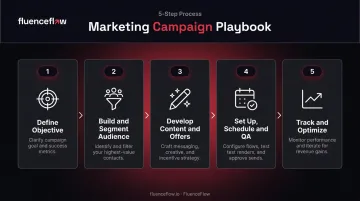
5. Track Performance and Optimize
After sending, pull the metrics that drive decisions:
| Metric | What It Tells You |
|---|---|
| Revenue generated | The campaign's actual business impact |
| Revenue per recipient | Comparable across campaigns of different sizes |
| Conversion rate | How well the offer and landing page worked together |
| Unsubscribe rate | Whether the message was relevant to that segment |
| Open rate | Directional only — not reliable for decision-making |
Reading the report isn't enough. Every campaign should produce one concrete change — a different offer, a tighter segment, a revised CTA — that makes the next send sharper.
Types of Marketing Campaigns DTC Brands Should Know
Promotional Campaigns
Product launches, seasonal sales, and limited-time offers are the most common campaign type in e-commerce — and the most overused. Discount-driven promotions can train customers to wait for sales rather than buying at full price, and Simon-Kucher research found that 30–40% of promotions can produce negative ROI. That data comes from FMCG brands in MENA, so it doesn't translate directly to every DTC context — but the margin risk is real and well-documented.
Promotions work. They just need to be balanced with value-driven messaging rather than defaulting to discounts every send.
Retention and Lifecycle Campaigns
This is where email and SMS management delivers the highest ROI for DTC brands. Lifecycle campaigns include:
- Post-purchase sequences: reinforce the buying decision, introduce complementary products, build long-term brand affinity
- Replenishment reminders: timed to when the product actually runs out, not arbitrary intervals
- Win-back campaigns: re-engage lapsed buyers before they switch to a competitor
- Loyalty-based offers: reward repeat customers in ways that make leaving feel like a loss
Omnisend's 2024 analysis of 24 billion emails found automated messages generated 37% of email sales from just 2% of send volume, earning $2.87 per automated send versus $0.18 per scheduled campaign send.
That gap explains why agencies like FluenceFlow focus specifically on building these lifecycle systems for DTC brands — their retention programs have driven over $7.5M in attributed revenue across 30+ clients, with email and SMS averaging 41% of total store revenue.
Educational and Content Campaigns
Campaigns that teach customers how to use a product, share the brand's story, or surface user-generated content build trust and reduce churn. This is especially important for high-AOV brands where the consideration cycle is long, or subscription brands where the relationship needs to be maintained between purchase events.
These campaigns are harder to attribute directly to revenue, but they tend to show up in LTV data: customers who receive consistent educational content churn at lower rates and spend more over time.
Campaign Management Best Practices
Consistency Over Perfection
The biggest campaign management failure for most DTC brands isn't bad creative. It's inconsistency. A brand that sends campaigns on a reliable cadence — even imperfect ones — will outperform a brand that sends sporadically while waiting for the "perfect" version.
Build the repeatable cadence first. Optimize once it's running.
Test One Variable at a Time
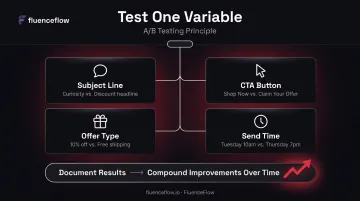
A/B testing is only actionable when you isolate a single variable. Testing subject line and offer type and send time in the same test means you can't attribute the result to any one change.
Pick one variable per test:
- Subject line (same offer, different framing)
- CTA button text or placement
- Offer type (discount vs. free shipping vs. bonus)
- Send time (Tuesday morning vs. Thursday afternoon)
Build a simple testing roadmap across campaigns and document results. Over time, those incremental improvements compound.
Use Data to Optimize, Not Just Report
There's a meaningful difference between reporting (looking backward at numbers) and optimization (using those numbers to make a forward decision). Set a weekly or monthly review cadence where each session produces a specific action, not just a slide deck:
- Adjust a segment based on engagement drop-off
- Swap an underperforming offer for a tested alternative
- Queue a new A/B test based on what last month's data flagged
The brands that pull the most revenue from email aren't sitting on the best data. They're the ones acting on it every week.
Frequently Asked Questions
What is meant by campaign management?
Campaign management is the structured process of planning, executing, monitoring, and optimizing marketing campaigns. It covers everything from setting goals and building audience segments to scheduling sends and analyzing results — the discipline that moves marketing strategy from plans into measurable revenue.
What is the role of a campaign manager?
A campaign manager oversees the full lifecycle of a marketing campaign — coordinating creative, managing timelines and budgets, ensuring consistent messaging, and analyzing performance. For DTC brands without an in-house team, a retention agency like FluenceFlow handles this function, requiring just 30–45 minutes per week of the brand owner's time after onboarding.
Is a campaign manager the same as a CRM?
No — these are different things. A CRM (Customer Relationship Management system) is a database that stores customer data. A campaign manager is either a person or a software tool that uses that data to plan and execute marketing campaigns. Platforms like Klaviyo effectively combine both functions for e-commerce brands.
What are the key metrics to track in campaign management?
The most important metrics for DTC brands are revenue generated, conversion rate, revenue per recipient (RPR), click-through rate, and unsubscribe rate. For email and SMS, RPR is often the most useful single metric — it normalizes performance across campaigns with different list sizes and send frequencies.
What is the difference between a campaign and a flow in email marketing?
A campaign is a one-time broadcast sent to a defined segment at a specific time — a promotional email or a seasonal announcement. A flow (or automation) is a triggered sequence based on subscriber behavior, such as an abandoned cart or post-purchase series. Effective retention marketing uses both: flows run always-on automation while campaigns handle timely, intentional outreach.