Introduction
You're driving traffic. Customers are hitting your product pages, scrolling your Instagram, reading your reviews. But they're not converting at the rate you need — and your paid ad costs keep climbing.
This is where most DTC brands hit a wall. They pour more budget into acquisition, watch their cost-per-click rise, and wonder why growth feels like a treadmill.
Inbound marketing is the strategy that changes this dynamic. Rather than buying attention through ads and interruptions, inbound earns it — by delivering helpful content, relevant experiences, and timely communication that pulls the right customers toward your brand when they're already looking for what you sell.
This article covers a clear definition, how inbound compares to outbound, the three-stage framework, and the practical strategies that make it work for e-commerce and DTC brands.
Key Takeaways
- Inbound marketing attracts customers through content and value — not paid interruptions
- The Attract-Engage-Delight framework maps directly to the DTC customer journey
- Email and SMS are the highest-ROI inbound channels because your audience has already opted in
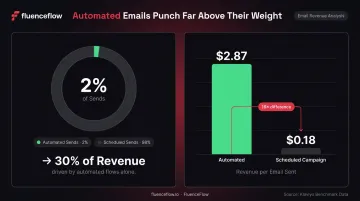
- Automated emails are just 2% of sends but drive 30% of email revenue, per Omnisend's 2026 report
- Inbound assets compound: a strong email flow or blog post keeps generating returns long after it's built
What Is Inbound Marketing?
Inbound marketing is a customer-centric growth strategy that creates value — through content, education, and personalized experiences — that naturally draws the right audience toward a brand when they're actively searching for solutions.
The core philosophy is straightforward: instead of buying attention, you earn it. Rather than interrupting people with cold ads or purchased lists, inbound marketing answers their questions, solves their problems, and builds trust over time. Customers come to you.
What Inbound Is and Isn't
Inbound marketing is not a single tactic or channel. It's a methodology spanning multiple disciplines — all aligned around where a buyer is in their journey:
- Content marketing (blog posts, guides, videos)
- SEO (getting found when buyers search)
- Email and SMS (nurturing relationships post-capture)
- Social media (building awareness and community)
Brian Halligan, HubSpot's co-founder, popularized the term around 2005. The original model had four stages — Attract, Convert, Close, Delight. In 2018, HubSpot replaced that funnel with a flywheel: Attract, Engage, and Delight — built on the insight that customer momentum doesn't stop at the sale. The flywheel keeps spinning because happy customers generate referrals and repeat purchases, feeding growth back into the top of the cycle.
That post-sale momentum is exactly why inbound thinking translates so well to DTC e-commerce. A B2B buyer might spend months evaluating options. A DTC customer can discover, research, and purchase within a single session. The framework applies either way — the pacing is just compressed, and intent is often higher from the very first touchpoint.
Inbound vs. Outbound Marketing: What's the Difference?
| Inbound | Outbound | |
|---|---|---|
| Direction | Pulls customers in | Pushes messages out |
| Audience | Already searching or interested | Broad, untargeted |
| Examples | SEO blog posts, email flows, reviews | Paid ads, cold email, direct mail |
| Cost model | Upfront investment, compounds over time | Ongoing spend required |
| Trust level | Higher — customer initiated the contact | Lower — brand initiated the interruption |
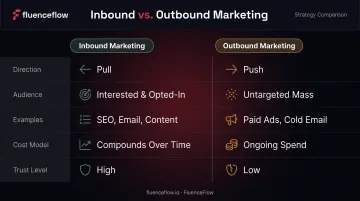
Outbound generates faster short-term spikes but requires continuous spend to maintain results. Cut the budget, and the traffic disappears with it.
Inbound builds durable assets — blog posts, email lists, product reviews, UGC — that generate traffic and conversions long after the initial investment.
The two approaches aren't mutually exclusive, either. The strongest DTC brands use inbound content to lower their cost-per-acquisition from paid channels, then extend customer lifetime value through retention-focused owned channels like email and SMS.
The Three Stages of Inbound Marketing
The Attract-Engage-Delight framework mirrors the customer journey from first discovery through purchase and into post-purchase loyalty. Here's how each stage works for DTC brands.
Attract
The Attract stage is about bringing the right people to your store — not maximum traffic, but qualified traffic. People who actually want what you sell.
This happens through:
- SEO-optimized content — blog posts, buying guides, product comparisons that rank when customers search
- Social media — organic content that surfaces your brand in relevant feeds
- Earned visibility — YouTube tutorials, podcasts, press coverage that reach buyers already in research mode
Real examples: a camping gear brand ranking for "best lightweight hiking tents," a skincare brand publishing YouTube tutorials, a coffee brand with brewing guides that show up in search. None of these require ad spend. All of them bring in shoppers who are already looking.
Google's 2023 research across 15 markets found that 60% of consumers took six or more actions before buying from an unfamiliar brand — including searching for reviews (75%) and visiting the brand's website (67%). Your inbound content needs to show up across those touchpoints.
Engage
Those six-plus touchpoints don't happen in one visit. The Engage stage captures visitors before they leave, then keeps the conversation going until they're ready to buy.
This includes:
- Email capture via pop-ups, lead magnets, and quizzes
- Welcome sequences that introduce your brand and build trust
- Browse-abandonment flows for shoppers who viewed products but didn't buy
- Abandoned cart recovery for high-intent buyers who didn't complete checkout
- Personalized SMS that reaches customers on the channel they check most
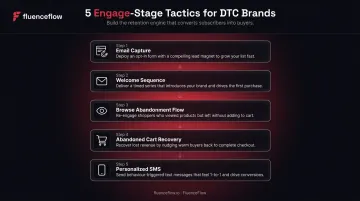
Engagement isn't just about the first purchase. It's the ongoing conversation between your brand and a shopper who's still deciding — or who bought once but hasn't come back yet.
Delight
The Delight stage is where retention happens. Most DTC brands lose customers not because of bad products, but because they go silent after checkout.
Post-purchase inbound tactics include:
- Product education emails that help customers get more value from what they bought
- Replenishment reminders timed to a product's typical usage cycle
- Loyalty and rewards programs that make leaving feel like a loss
- Review request sequences that turn satisfied buyers into social proof
- Win-back campaigns that reactivate lapsed customers before they switch to a competitor
Customers who feel supported after the sale come back. When they come back, they spend more — and they tell people. That word-of-mouth compounds over time in a way no paid channel can replicate.
Key Inbound Marketing Strategies for E-Commerce Brands
Here's how the channels and tactics behind inbound marketing apply specifically to Shopify and DTC brands.
Content Marketing and SEO
Blog posts, buying guides, product comparison articles, and how-to content are core inbound assets. They generate free, intent-driven traffic from shoppers actively looking for solutions your brand provides.
42% of U.S. consumers began their product searches on search engines in 2024. If your brand isn't showing up in those searches, a competitor is.
The key is creating content that matches what your target customer is actually typing into Google — not just generic brand content. A guide titled "How to Choose a Cast Iron Skillet" will attract ready-to-buy shoppers for a cookware brand. That's compounding, free traffic that paid ads can't replicate.
Email and SMS Marketing
Email and SMS are the highest-ROI inbound channels for e-commerce — because they reach an audience that has already opted in. Every message goes to someone who raised their hand and said, "I want to hear from you."
Unlike paid ads, these channels get more valuable over time as the list grows.
The real engine of inbound retention is automated flows. Omnisend's analysis of 150,000 brands found that automated emails were only 2% of sends but generated 30% of email-driven revenue — delivering an average of $2.87 per automated email versus $0.18 per scheduled campaign, a 16x difference per send.
FluenceFlow, a Klaviyo-certified retention agency for DTC brands, reports clients averaging 41% of total store revenue from email and SMS — with welcome flows and popups typically live within two weeks and measurable revenue impact within 30 days.
Social Media and Community
Organic social content — product demos, behind-the-scenes footage, UGC, and educational posts — builds brand awareness and trust without paid spend. It also works as a discovery channel for new audiences.
Social media is also two-way. Responding to comments, engaging with DMs, and replying publicly to reviews is part of the Delight stage — it signals to prospective customers that your brand is responsive, and reinforces that same trust with existing ones. That earned trust feeds directly into what converts browsers: social proof.
Social Proof and Reviews
Customer reviews, testimonials, and UGC are inbound assets that do passive persuasion work across every touchpoint — search results, product pages, social platforms, and third-party sites.
PowerReviews found that 99.75% of 8,153 U.S. online shoppers read reviews at least sometimes when shopping online. That's essentially every online buyer. Reviews aren't a nice-to-have — they're a core part of the purchase decision.
Analysis of 1.5 million product pages also found a 3.8% conversion lift among visitors who were served UGC. Building a consistent review-generation system is one of the most underrated inbound tactics available to DTC brands.
Benefits of Inbound Marketing
Inbound marketing builds assets that work for you long after the initial effort — and gets more cost-efficient the longer you do it. Here's why it compounds over time.
Compounding Value Over Time
A well-optimized blog post, product review page, or email flow keeps generating value long after it's created. A paid ad stops working the moment the budget runs out. Inbound assets are owned, and they keep paying off.
Trust That Paid Ads Can't Buy
Customers who discover a brand through helpful content, a warm referral, or a genuine review arrive with higher intent and more goodwill than someone cold-targeted by an ad. Nielsen's 2021 survey of 40,000+ global consumers found that 88% trusted recommendations from people they know — the highest-rated trust channel — far outperforming online banner ads, SMS ads, and search ads.
More Cost-Efficient Over Time
Inbound requires upfront investment in content and tools. As those assets accumulate, the cost to acquire each new customer drops. For DTC brands on tight margins, that efficiency curve matters:
- A growing content library attracts organic traffic without ongoing ad spend
- An expanding email list converts at lower cost than any paid channel
- A loyal social following amplifies reach without buying it each time
Frequently Asked Questions
What are the 5 steps of inbound marketing?
The practical five-step sequence: identify your target buyer, create valuable content, optimize for search and distribution, capture and nurture leads, then delight customers post-purchase. This builds on HubSpot's original Attract, Convert, Close, and Delight framework by adding upfront audience research as its own distinct phase.
What are examples of inbound marketing?
Common e-commerce examples include SEO blog posts, YouTube tutorials, email welcome sequences, SMS flows, customer review programs, organic social content, pop-up lead capture forms, and post-purchase nurture emails. Each works because the customer chose to engage on their own terms.
What is the difference between inbound and outbound marketing?
Inbound earns attention through helpful content that customers find on their own. Outbound pushes messages to audiences who haven't asked for them — such as paid ads, cold emails, and direct mail. Inbound builds long-term assets; outbound generates short-term exposure tied to continuous ad spend.
Is email marketing considered inbound marketing?
Email marketing is inbound when sent to an audience that opted in voluntarily. Automated behavioral flows — welcome series, post-purchase sequences, win-back campaigns — are core inbound tactics because they respond to customer actions rather than interrupting cold audiences.
How long does it take for inbound marketing to show results?
SEO and content typically take 3-6 months to build traction, based on an Ahrefs poll of 3,680 practitioners. Email and SMS flows can generate measurable revenue within the first 30-60 days once set up, making them the fastest-ROI inbound channel for most e-commerce brands.
What are the biggest challenges of inbound marketing?
Inbound marketing demands consistent content creation, patience with SEO timelines (often 3-6 months before traction), and a coordinated multi-channel strategy. It's not a single campaign — it's an ongoing system, and brands that treat it as one-and-done rarely see the compounding results it's capable of producing.