Introduction
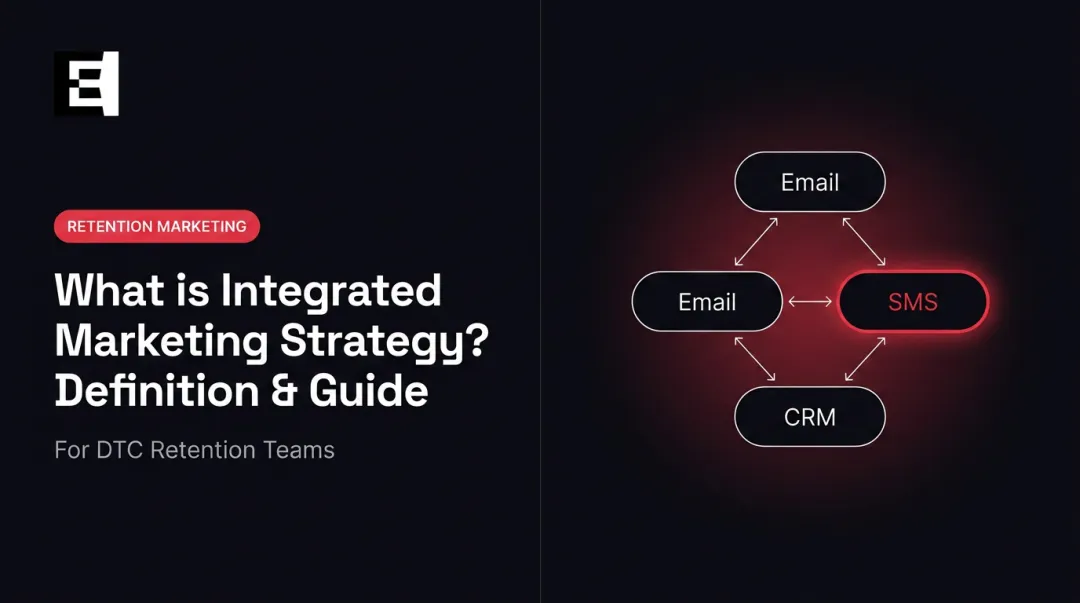
Most DTC brands are already running email, SMS, social media, and paid ads. The problem isn't channel coverage — it's that those channels don't talk to each other. Email doesn't know what the SMS subscriber clicked. Paid retargeting hits customers who already purchased. Each team runs its own playbook, and the customer experiences four different brands instead of one — that's where revenue gets left behind.
Omnichannel marketing closes that gap. It connects every touchpoint, from first Instagram impression to fifth repeat purchase, into a single coherent experience driven by shared data. DTC brands that build this infrastructure see higher retention, stronger customer lifetime value, and better conversion across the board.
This article covers what you need to build a strategy that actually works:
- What omnichannel marketing means (and what it doesn't)
- Why it matters for DTC unit economics
- The four pillars that hold it together
- A step-by-step build guide
- Best practices that separate high-performing brands from those still guessing
Key Takeaways
- Omnichannel connects all touchpoints into one seamless experience; multichannel just means being on multiple platforms independently
- DTC brands with connected channel strategies see higher retention, LTV, and conversion rates
- Email and SMS are the highest-ROI owned channels and should anchor your retention system
- Strong omnichannel strategy starts with mapping your customer journey and building systems that deliver relevant messaging at each step
- Success requires consistent measurement: retention rate, email/SMS revenue attribution, LTV, and repeat purchase rate
What Is Omnichannel Marketing?
Omnichannel marketing integrates all marketing channels — online and offline — into a single, unified brand experience. Every touchpoint feels connected, so a customer moving from an Instagram ad to your website to an SMS feels like they're dealing with one brand throughout.
That continuity doesn't happen by accident. The unifying element is shared data.
Every channel reads from and writes to the same customer record, so context travels with the customer rather than resetting at each new touchpoint.
Omnichannel vs. Multichannel: What's the Difference?
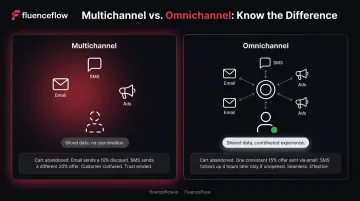
Multichannel marketing means operating across multiple channels that each run independently — separate data, separate messaging, separate strategy. The channels don't inform each other. You're present in multiple places, but the experience is fragmented.
The difference becomes obvious with a concrete example:
- Multichannel: A brand sends a promotional email blast and runs an SMS campaign simultaneously. Neither knows about the other. The customer gets both — with overlapping messages, no sequencing logic, and no coordination.
- Omnichannel: A customer abandons their cart. The system sends a cart recovery email. If it goes unopened within four hours, an SMS triggers. If they purchase from the SMS, the email suppresses. All of this runs from a single platform with unified data.
Attentive's 2026 research defines omnichannel as an approach where each channel interaction builds on prior interactions — meaning context is never lost, regardless of where the customer shows up next.
Why Omnichannel Marketing Matters for DTC Brands
The revenue case for omnichannel isn't theoretical. Bain's online-commerce research found that repeat apparel customers spent 67% more in months 31–36 than in months 0–6 — and that a customer's tenth purchase was nearly 80% larger than their first. The economic flywheel of retention is real, and omnichannel is what keeps that flywheel spinning.
Here's how it plays out across four specific areas for DTC brands:
1. Customer Lifetime Value When customers experience consistent, personalized touchpoints across channels, they buy more frequently and spend more per order. For DTC brands where repeat purchase rate is a make-or-break unit economics variable, LTV improvement directly impacts whether the business is profitable or not.
2. Customer Acquisition Cost Every retained customer is one you don't have to re-acquire through paid channels. As your omnichannel retention system matures, you rely less on expensive paid acquisition to replace churned customers — and your overall CAC drops relative to LTV.
3. Personalization Revenue Lift McKinsey research found that personalization typically drives a 10–15% revenue lift, with company-level results ranging from 5–25%. Omnichannel gives you richer customer data — purchase history, browsing behavior, engagement signals, channel preferences — which makes that personalization possible across your entire customer base. The same McKinsey study found that 76% of consumers became frustrated when they didn't receive personalized interactions.
4. Brand Consistency as a Trust Signal When your messaging, tone, and offers are consistent across email, SMS, social, and your website, customers develop stronger brand affinity. That consistency signals reliability. Customers who trust your brand spend more, come back more often, and refer others without being asked.
Together, these four dynamics compound over time. The brands that win on retention aren't just running more channels — they're connecting them intentionally.
The Four Pillars of Omnichannel Marketing
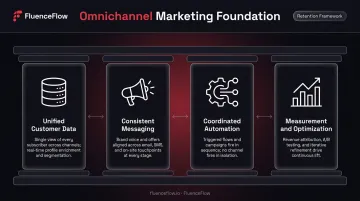
A sustainable omnichannel strategy rests on four foundational elements. Each one is a specific infrastructure requirement — get these right before you try to scale.
Pillar 1 — Unified Customer Data
The entire system starts here. All channels must feed into a single source of truth — typically a CRM or email/SMS platform like Klaviyo — so that every touchpoint has context about who the customer is and what they've already done. Without this, channels operate in silos and the "omnichannel" label is just a rebrand of what you already have.
This means your Shopify purchase data, website behavior, email engagement, and SMS interactions all live in one place and inform each other in real time.
Pillar 2 — Consistent Messaging Across Every Channel
Every channel should reflect the same brand voice, visual identity, and campaign logic. A customer shouldn't receive a premium, editorial email from your brand and then get a spammy discount SMS five minutes later. The experience should feel like one coherent brand — regardless of which channel the customer is on.
Pillar 3 — Coordinated Channel Automation
Channels need to work together through automated flows that respond to customer behavior — not through manual, siloed campaigns that happen to run at the same time. In practice, coordination means suppression logic and trigger-based flows that check what already happened on other channels before deciding what to send next — not just sequencing messages by time.
Pillar 4 — Measurement and Continuous Optimization
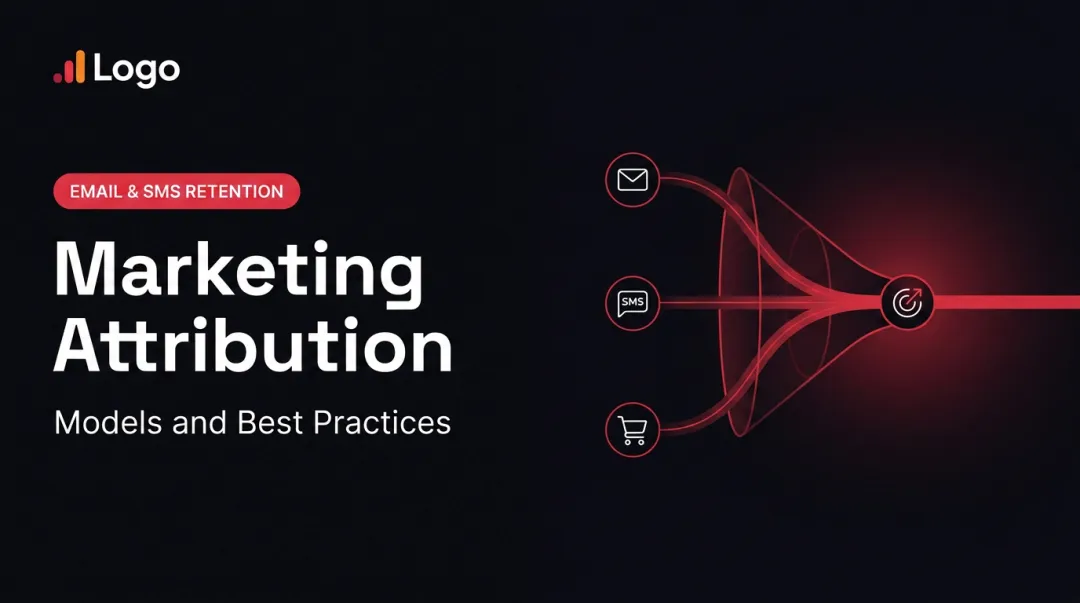
Each channel needs clear attribution so you know what's actually driving revenue — and where your next dollar should go. Key metrics to track:
- Email and SMS revenue attribution
- Repeat purchase rate by channel
- Customer LTV by cohort
- Flow conversion performance
Build a regular review cadence. The system compounds over time, but only if you're actively measuring and adjusting it.
How to Build an Omnichannel Marketing Strategy for Your DTC Brand
Step 1 — Map Your Customer Journey
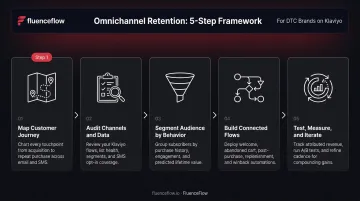
Before building anything, document how a customer actually moves from first discovery to first purchase to repeat buyer. Identify the key touchpoints — paid ad, website visit, email capture, abandoned cart, post-purchase — and note where the experience currently breaks down or feels disconnected. Most DTC brands find three or four friction points that siloed channels have left unaddressed.
Step 2 — Audit Your Current Channels and Data Infrastructure
List all active marketing channels. Assess whether they share data with each other. For most DTC brands, this audit reveals that channels are running blind — email doesn't know what the SMS subscriber clicked, and paid retargeting is hitting customers who purchased last week.
Step 3 — Segment Your Audience by Behavior and Purchase Patterns
Use behavioral and transactional data to build audience segments that reflect where customers are in their lifecycle:
- New subscribers (haven't purchased yet)
- One-time buyers (purchased once, at risk of not returning)
- Active repeat buyers
- At-risk or lapsed customers
Segment-specific messaging dramatically outperforms one-size-fits-all campaigns. The messaging that converts a first-time buyer is completely different from what re-engages a lapsed customer.
Step 4 — Build Connected Flows, Not Isolated Campaigns
Those segments become the foundation for your flow architecture. Unlike one-off campaigns, automated flows respond to actual customer behavior in real time — across every channel — so the right message reaches the right person without manual intervention:
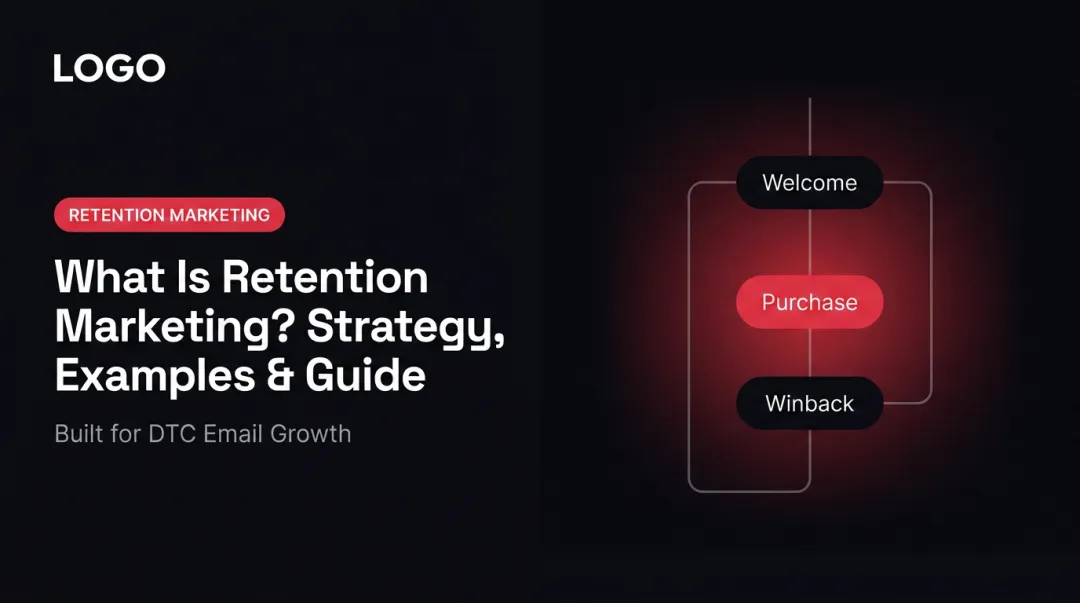
- Welcome series — introduced immediately after signup, setting brand expectations and driving first purchase
- Abandoned cart sequence — email first, SMS fallback if unopened, suppressed once purchased
- Post-purchase flow — education, upsell, cross-sell, review request
- Win-back sequence — re-engages lapsed buyers before competitors do
Critically, these flows need to be coordinated — email and SMS should not send competing or redundant messages. Suppression logic matters as much as the messaging itself.
Step 5 — Test, Measure, and Iterate
Establish the KPIs you'll track from day one: retention rate, revenue per recipient, flow conversion rate, and LTV by cohort. Build a regular review cadence — weekly at minimum — and run ongoing A/B tests on subject lines, send times, offers, and channel sequencing. When a metric underperforms, trace it back to the specific touchpoint — not the channel as a whole — and adjust that trigger, message, or timing before scaling anything else.
Email and SMS: The Retention Engine of Your Omnichannel Strategy
Email and SMS are the two highest-ROI retention channels in any DTC omnichannel strategy — and the reason is straightforward: they're owned channels with no algorithm dependency, no rising CPMs, and no platform risk. Your list is yours. And it compounds in value as it grows.
Klaviyo's 2026 benchmark data shows that automated email flows generate nearly 41% of total email revenue from just 5.3% of sends. That ratio is what makes flows — not campaigns — the core of any retention system.
How Email and SMS Work as a Coordinated Pair
Email and SMS each have natural roles within a retention system:
| Channel | Best For |
|---|---|
| Longer-form content, education sequences, product storytelling, non-urgent messaging | |
| SMS | Time-sensitive offers, cart recovery, flash sales, reengagement nudges |
When sequenced correctly, the two channels reinforce each other. A customer who ignores an email but responds to an SMS is giving you channel preference data. A customer who reads the email but doesn't click probably needs a different offer — not a second nudge on the same channel. The system gets smarter with every interaction.
Core Flows Every DTC Brand Needs
These aren't optional extras — they're the automated revenue infrastructure that should be running at all times:
- Welcome/lead nurture flow — converts new subscribers into first-time buyers
- Abandoned cart flow — email + SMS coordination with suppression logic once purchased
- Post-purchase flow — education, cross-sell, upsell, review request timed appropriately
- Win-back flow — re-engages customers before they switch to a competitor permanently
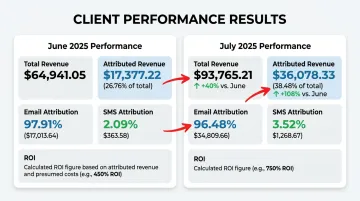
The difference between flows that exist and flows that perform comes down to how they're built. FluenceFlow, a Klaviyo Certified Partner working with 30+ DTC brands, builds these systems around each brand's unit economics — not generic templates. Clients average 41% of total store revenue attributed to combined email and SMS, with some brands reaching as high as 48.6% (American Grazed Beef). One client went from $0 in email revenue to $97K/month within 44 days of rebuilding from scratch.
The average FluenceFlow client sees a 10.6x ROI in the first 90 days, with meaningful revenue impact typically appearing within 60–90 days of engagement.
Omnichannel Marketing Best Practices (and Mistakes to Avoid)
Best Practice 1 — Don't Add Channels for the Sake of It
Omnichannel does not mean being everywhere. It means being highly effective wherever your customers actually are. Most DTC brands are better served by executing 2–4 core channels exceptionally well — with proper data integration and coordinated flows — than spreading thin across six platforms with no real connection between them.
Start with email, SMS, and your website. Get those working together before expanding.
Best Practice 2 — Suppress Cross-Channel Messaging Conflicts
One of the most common and damaging mistakes is sending an email and an SMS with the same message within minutes of each other, or retargeting a customer who already purchased. This creates friction, drives unsubscribes, and signals to customers that your systems don't actually know who they are.
Implement suppression logic so:
- SMS doesn't fire if the email was opened within a defined window
- Campaigns suppress customers who are mid-flow
- Paid retargeting excludes recent purchasers
Best Practice 3 — Use Data to Personalize, Not Just Automate
Automation handles delivery. Personalization handles relevance. An automated email that goes to every customer with the same message is still generic — it just arrives faster.
Use customer data to make every touchpoint feel relevant:
- Purchase history (what they've bought, what they haven't)
- Product category and browsing behavior
- Order frequency and AOV
- Lifecycle stage (new, active, at-risk, lapsed)
Personalization at this level requires unified data infrastructure. Without it, you're automating blind — sending messages based on assumptions rather than actual customer behavior. That's why getting your data foundation right comes before everything else in this stack.
Frequently Asked Questions
What is an example of omnichannel marketing?
A customer discovers your brand via an Instagram ad, signs up for email to get a discount, and enters your welcome flow. They abandon their cart, receive an email, ignore it, and get an SMS reminder that closes the sale. After purchase, a post-purchase sequence delivers product education and a cross-sell offer — all triggered automatically from a single integrated system.
What are the four pillars of omnichannel marketing?
The four pillars are:
- Unified customer data — a single source of truth across all channels
- Consistent messaging and brand experience across every touchpoint
- Coordinated channel automation with suppression logic to avoid overlap
- Continuous measurement and optimization to improve performance over time
What is the difference between omnichannel and multichannel marketing?
Multichannel means using multiple channels that operate independently — each with separate data and strategies. Omnichannel means all channels are integrated, share customer data in real time, and create a cohesive experience where every interaction builds on the last.
What channels should DTC brands prioritize in an omnichannel strategy?
Email and SMS first — they're your highest-ROI owned channels with no platform dependency. Build those out properly before expanding. Support them with social media for acquisition and retargeting, and a well-optimized website as the central conversion point.
How do I measure the success of my omnichannel marketing strategy?
Start with these core metrics:
- Customer retention rate and repeat purchase rate
- Email and SMS attributed revenue (flows vs. campaigns, broken out separately)
- LTV by acquisition source
Set up cross-channel attribution before scaling spend so you know which channels are actually driving revenue.
What tools do I need to run omnichannel marketing for my ecommerce store?
Three tools cover the core stack: a unified email/SMS platform (Klaviyo for DTC), an ecommerce platform (Shopify), and attribution analytics. Choose tools that integrate natively so purchase data, behavioral signals, and engagement data flow between them automatically.