Personalization is what changes that equation. Not the cosmetic kind where you drop a first name into the subject line and call it a day — but the kind where a customer who bought coffee three weeks ago gets a replenishment reminder, while a first-time visitor who browsed your premium gear gets a nurture sequence built for high-consideration purchases.
This guide covers what real personalization looks like, how to collect the right data, which strategies actually move revenue for e-commerce brands, and the mistakes that quietly undermine the whole system.
Key Takeaways
- Personalization goes beyond first names — it requires behavioral data, purchase history, and automated triggers working together
- Behavior-triggered flows generate 41% of email revenue from just 5.3% of sends, according to Klaviyo's 2026 dataset of 183,000 brands
- RFM-based segmentation (recency, frequency, monetary) is more useful for DTC brands than basic demographic splits
- Stale flows, surface-level name personalization, and over-segmentation are the three mistakes that break most systems
- Automation handles the execution — brands typically spend 30–45 minutes per week on approvals once the system is built
What Is Email Campaign Personalization?
Personalization means using subscriber data and behavioral signals to deliver tailored content, offers, and timing. That definition sounds simple, but most brands stop at the easiest part: the merge tag.
There's a meaningful difference between surface-level and deep personalization:
| Type | Examples |
|---|---|
| Surface-level | First name in subject line, generic welcome email, basic demographic segments |
| Deep personalization | Behavioral triggers, purchase history-based flows, browse abandonment emails, predictive product recommendations |
Most brands live in the top row. The brands driving 35–45% of revenue from email have built the bottom row.
The Core Components
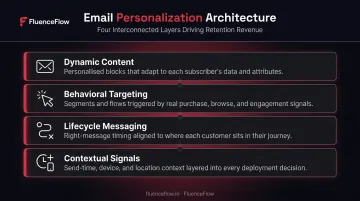
Real personalization runs on four interconnected layers:
- Dynamic content — Email blocks that show different products, offers, or messaging based on who's receiving them
- Behavioral targeting — Flows triggered by what a customer actually did (viewed a product, abandoned a cart, made a second purchase)
- Lifecycle messaging — Content matched to where someone is in the customer journey
- Contextual signals — Device type, engagement history, and optimized send timing
A Simple Test
Here's a quick way to check whether an email is personalized: A customer who bought a consumable product 30 days ago receives a replenishment reminder with the exact product they ordered — that's personalized. That same customer receiving a "check out our new arrivals" blast is not.
That second scenario isn't just a missed sale — it erodes the relevance that keeps subscribers engaged over time.
Building real personalization requires data collection, segmentation, and automation working together — not as separate initiatives, but as a single connected system.
Why Email Personalization Matters for DTC Brands
Klaviyo's 2026 benchmark data across 183,000 brands puts a number on what most DTC founders already sense: behavior-triggered flows punch far above their weight. The gap isn't close:
- Flows generated 41% of email revenue from just 5.3% of sends
- Flow click rate averaged 5.58% vs. 1.69% for campaign sends
- Placed-order rates hit 2.11% for flows vs. 0.16% for campaigns
That's a 13x conversion difference — driven entirely by relevance.
The Retention Economics Argument
DTC brands spend heavily to acquire customers through paid channels. Email personalization is what converts those one-time buyers into repeat customers — and repeat purchase rate is the core driver of lifetime value.
Without personalization, you're treating your most valuable asset — an owned list of people who already bought from you — the same way you'd treat a cold audience. The math on that doesn't work.
The Bar Is Higher Than It Used to Be
Your subscribers aren't comparing your emails to other small DTC brands. They're comparing them to what Amazon, Chewy, and Sephora send — companies with massive personalization infrastructure that makes every recommendation feel relevant.
Generic campaigns don't just underperform in isolation. They train your list to mentally unsubscribe from your emails even before they click the unsubscribe button.
FluenceFlow's client portfolio illustrates this concretely: brands that arrive with email driving 6–27% of total revenue consistently reach 35–48% email attribution after a personalized system is built out. American Grazed Beef, for example, reached 48.6% of total revenue attributed to email, with $1.5M+ in attributed revenue after FluenceFlow built out their full retention system.
How to Collect the Right Customer Data for Personalization
Your ESP can only personalize what it knows. Without the right customer data feeding into it, even the best-configured Klaviyo account sends generic content to everyone.
Data Collection at Signup
The signup moment is your best opportunity to collect declared preference data — and most brands waste it by asking for only an email address.
Multi-step popup forms let you capture:
- Product category preferences
- Shopping intent or occasion (particularly useful for apparel and gifts)
- Flavor, style, or variant preferences for consumable and CPG brands
- SMS opt-in status alongside email
A real example: Carroll's Corn uses a popup that asks "What flavor are you craving?" with options for Sweet Caramel, Cheesy Cheddar, Classic Butter, and Zesty Ranch. Subscribers self-select before the discount is even revealed. That single question populates a preference field that personalizes every follow-up email.
That kind of multi-step, question-based capture is exactly what Alia's platform is built for — routing declared preference data into Klaviyo flows from the moment someone opts in. FluenceFlow deploys it as a certified Alia partner for this reason.
Behavioral Data from On-Site Activity
Shopify's native integration with Klaviyo passes behavioral events — product page views, cart additions, checkout initiations — directly into your ESP. This is the data that powers your browse abandonment and abandoned cart flows.
Klaviyo's browse abandonment data shows a 0.96% conversion rate, 9.6 times the average campaign rate. That performance is entirely dependent on the Shopify-Klaviyo data connection working correctly.
Purchase Data as the Richest Signal
Order history is the single most powerful personalization input. It tells you:
- Which product categories a customer cares about
- Their average order value
- Purchase frequency and likely repurchase timing
- Which lifecycle stage they're in
Every new purchase should trigger a flow entry and update the segment that customer belongs to.
Data Hygiene
Personalization breaks when the underlying data is stale. Segments built on outdated behavior become irrelevant, and flow logic that made sense six months ago may now deliver the wrong message to the wrong person.
Keep your list healthy with these regular actions:
- Audit flow logic quarterly at minimum
- Remove bounced, fake, and chronically unengaged addresses on a rolling basis
- Investigate unexplained open rate drops — stale data is often the cause
Email Campaign Personalization Strategies That Drive Revenue
Audience Segmentation as the Foundation
Before you can personalize content, you need meaningful segments — and RFM (recency, frequency, monetary value) is the most actionable framework for DTC brands.
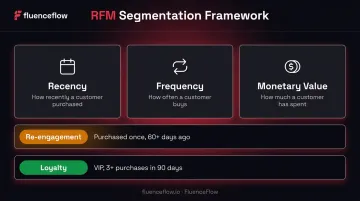
RFM breaks your list into groups based on:
- Recency — How recently did they purchase?
- Frequency — How many times have they bought?
- Monetary value — What's their cumulative spend?
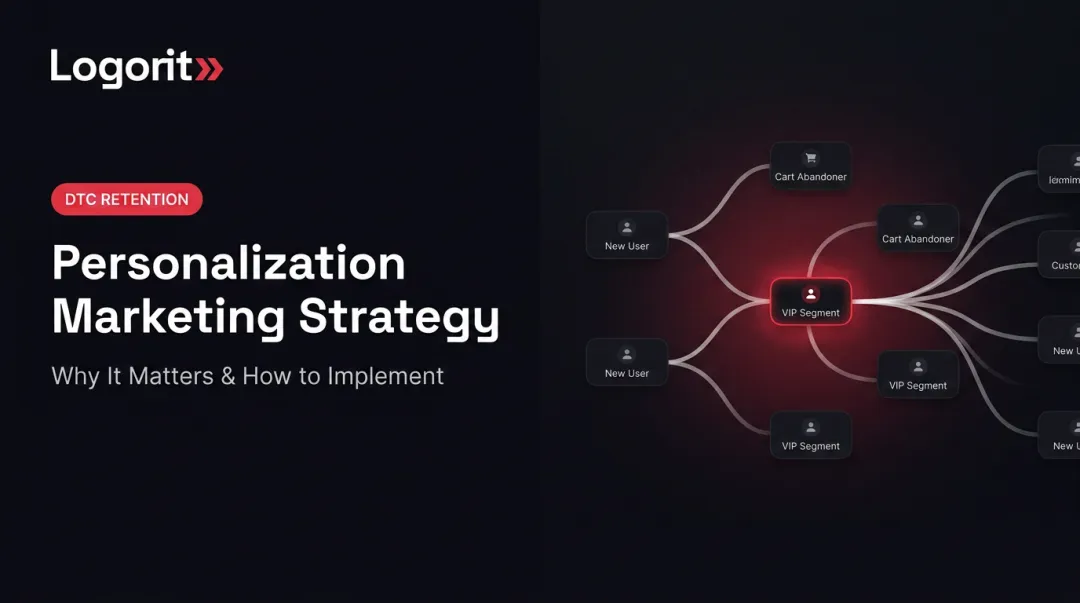
This creates segments that actually map to customer behavior and business value. A "purchased once, 60+ days ago" segment needs a re-engagement offer. A "VIP, 3+ purchases in the last 90 days" segment should get early access and loyalty messaging — not the same discount you're offering cold prospects.
The offer, tone, product angle, and urgency level should all change based on where a customer sits in the RFM matrix.
Behavioral Trigger Flows
Triggered flows are the highest-ROI activity in email marketing. They work because they respond to what a customer actually did — not when you decided to send.
Core flows every DTC store needs:
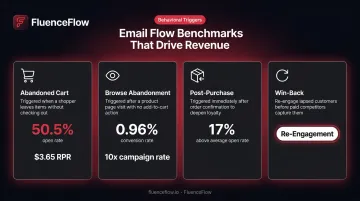
- Abandoned cart — Klaviyo's 2024 abandoned cart benchmark reports an average 50.5% open rate, 3.33% placed-order rate, and $3.65 revenue per recipient. Top-decile performers see $28.89 RPR.
- Browse abandonment — Triggered when someone views a product but doesn't add to cart. Converts at nearly 10x the average campaign rate.
- Post-purchase — Cross-sell, replenishment timing, and loyalty building. Post-purchase emails open at rates almost 17% above average automation benchmarks.
- Win-back — Re-engages lapsed customers before competitors capture them through paid channels.
Personalization inside flows matters too. A browse abandonment email for someone who viewed a $400 premium product should feel different from one triggered by a $30 consumable. Copy register, urgency, and value proposition all shift — and so should the product image and pricing context.
Dynamic Content in Campaign Sends
Dynamic content lets you send one campaign that shows different products, offers, or messaging to different segments, without building separate campaigns for each.
A pet brand can send a single "summer sale" email that shows dog products to dog owners and cat products to cat owners, using conditional content blocks in Klaviyo. The recipient sees a fully relevant email. You build one campaign.
For brands with large catalogs, this matters most. Sending the full product range to everyone dilutes relevance — and lower click-through rates translate directly into lost revenue per send.
Personalized Subject Lines and Send-Time Optimization
A personalized subject line should reflect what the subscriber actually cares about: their product category, purchase history, or loyalty tier. First-name insertion isn't personalization if the body of the email is still a generic blast.
Klaviyo's Smart Send Time feature selects optimal delivery windows based on historical open data, improving performance without changing email content. It's a low-effort improvement that adds up across your full send volume.
Those optimizations only go so far, though. The real multiplier is matching the message to where that subscriber actually sits in the customer journey.
Lifecycle-Based Campaign Personalization
Each lifecycle stage calls for a different message:
- New subscriber — Welcome sequence, brand introduction, first-purchase incentive
- First-time buyer — Post-purchase onboarding, confidence-building content, early cross-sell
- Repeat buyer — VIP messaging, early access, loyalty rewards, referral offers
- Lapsed customer — Win-back offer, urgency messaging, reminder of what they're missing
The same campaign sent to all four groups will resonate with none of them. FluenceFlow structures this differently depending on brand archetype: for high-AOV luxury brands like Sartoro, lapsed buyer messaging centers on trust and education rather than discounting. For consumable brands like American Grazed Beef, it's aggressive replenishment timing before competitors intercept the customer through social ads.
Common Email Personalization Mistakes to Avoid
Most personalization failures aren't technical — they're strategic. These three mistakes show up repeatedly across DTC email programs:
- Promising personalization, then delivering the same blast to everyone. A subject line that says "Hey Sarah, we picked these for you" followed by a generic campaign doesn't just underperform — it damages trust. Subscribers notice the gap between the promise and what's inside.
- Over-segmenting into micro-lists you can't maintain. Splitting your list into 40 segments sounds rigorous, but lists that are too small lack statistical significance and produce inconclusive test results. Effective segmentation is granular enough to change the message, and large enough to act on.
- Building flows once and never touching them again. Automated flows aren't "set and forget" infrastructure. If you reformulated a product or changed the pack size, a replenishment flow timed to 30 days is now wrong. Audit every active flow at least quarterly — stale logic is one of the most common issues FluenceFlow surfaces when auditing new client Klaviyo accounts.
How to Measure Whether Your Personalization Is Working
List-wide averages mask what's actually working. Track performance at the segment and flow level, not just the account level.
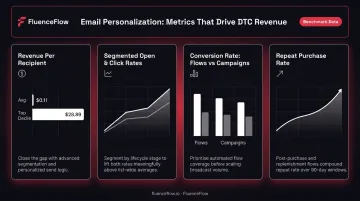
Metrics that matter:
- Revenue per recipient (RPR): Klaviyo's average email RPR is $0.11. Your flows — particularly abandoned cart — should significantly outperform this. Top-decile abandoned cart flows hit $28.89 RPR.
- Segmented open and click rates: Compare performance across key segments, not aggregate rates. A declining open rate in your repeat buyer segment is a different problem than the same decline in your lapsed segment.
- Conversion rate by flow vs. campaign: Flows should consistently outperform campaigns on placed-order rate. If they don't, your flow logic or timing needs review.
- Repeat purchase rate over time: The clearest signal that lifecycle personalization is working.
A/B testing is how you improve on these numbers over time. Test one variable at a time — subject line, dynamic content block, offer type, or send time — within a specific segment. Results from your VIP segment won't necessarily apply to your lapsed segment. Mixing them produces noise, not signal.
For brands working with FluenceFlow, weekly performance updates are benchmarked against agreed-upon KPIs and performance guarantees — so the data directly shapes what gets tested and refined each cycle.
Frequently Asked Questions
What is email campaign personalization?
Email campaign personalization is the practice of using customer data, behavior, and purchase history to tailor email content, timing, and offers to individual subscribers. It goes well beyond first-name merge tags — real personalization responds to what someone browsed, bought, or ignored.
How does email personalization increase revenue for e-commerce stores?
Personalization drives repeat purchases by delivering the right product or offer at the right moment. A replenishment reminder timed to when a customer is likely running low, for example, outperforms any generic promotional blast. Higher relevance translates directly to better open rates, click-through rates, and conversion.
What data do I need to start personalizing my email campaigns?
Start with email address and name for basic personalization. Meaningful behavioral personalization requires purchase history, browse behavior, and declared product preferences captured at signup or through a preference center.
What is the difference between segmentation and personalization?
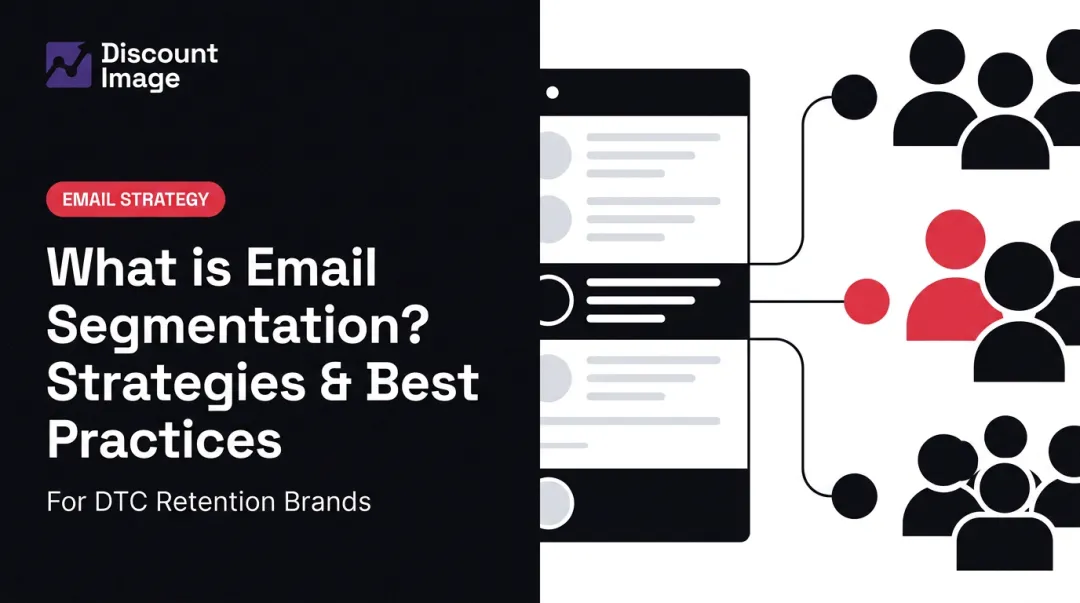
Segmentation divides your list into groups based on shared characteristics or behaviors. Personalization is tailoring the actual content, offer, or timing for each group or individual. Segmentation enables personalization — but sending the same email to a segment is not, by itself, personalization.
How do I personalize emails without a large marketing team?
Automation tools like Klaviyo handle execution by triggering emails based on behavior, so the right message goes out without manual effort. Working with a specialist agency like FluenceFlow means the entire system gets built and managed for you, reducing the ongoing time commitment to roughly 30–45 minutes per week for campaign approvals.
What are the most common email personalization mistakes to avoid?
Three mistakes come up repeatedly:
- Relying on first-name personalization with no behavioral follow-through in the email body
- Over-segmenting into micro-lists too small to generate statistically useful data
- Building personalized flows and never auditing them as products and customer behavior evolve