Introduction
Most DTC brands pour budget into acquiring new customers while sitting on a list of people who already bought from them — and went quiet. That's not a dead list. That's deferred revenue.
A win-back email campaign is a structured sequence triggered by customer inactivity. Not a one-off "we miss you" blast — a deliberate, escalating flow designed to reconnect lapsed subscribers or past buyers before they're gone for good.
This guide covers what DTC brands actually need to run effective win-back campaigns:
- How to define "lapsed" based on your repurchase window
- How to sequence emails without training customers to wait for discounts
- The best practices you can apply in Klaviyo right now
Key Takeaways
- Lapsed customers already know your brand — re-engaging them costs less than acquiring someone new
- "Lapsed" should be defined by your repurchase window, not a generic 90-day rule
- Win-back sequences should escalate — start soft, layer in value, then introduce an incentive only if earlier emails fail
- Segment by LTV before launching — your best offers should go to your most valuable customers
- Sunsetting non-responders protects your sender reputation — it's a deliberate strategy, not a concession
What Is a Win-Back Email Campaign?
A win-back campaign is a triggered email sequence sent when a subscriber or buyer goes silent — not a broadcast you send when revenue is slow.
The goal: re-engage lapsed contacts before they churn permanently — and do it with messaging that's specific enough to actually work.
Two Types of Lapsed Contacts
Win-back campaigns target two distinct groups — and the reason they went quiet usually differs, so the messaging needs to as well:
- Inactive subscribers — people on your list who haven't opened or clicked in an extended period. They may never have purchased. The goal here is re-engagement before they drag down your deliverability.
- Lapsed buyers — past customers who haven't purchased again within their expected repurchase window. These contacts have proven purchase intent, which makes them more valuable to recover.
The messaging for each group should differ. A lapsed buyer deserves product-specific nostalgia and a return offer. An inactive subscriber who never purchased may need a cleaner, simpler re-introduction to the brand.
How to Define "Lapsed" for Your Specific DTC Store
There's no universal inactivity window. A customer who hasn't bought from a coffee brand in 60 days has likely moved on to a competitor. A customer who hasn't bought from a premium furniture brand in 8 months might just be saving up.
Your lapsed definition should be anchored to your product's expected repurchase cycle — nothing else.
Lapsed Thresholds by Business Model
| Business Type | Examples | Suggested Lapsed Window |
|---|---|---|
| High-frequency / consumable | Supplements, coffee, pet food | 30–60 days past expected repurchase |
| Mid-frequency / catalog | Apparel, home goods | 90–120 days |
| High-AOV / low-frequency | Furniture, premium outerwear | 6–12 months |
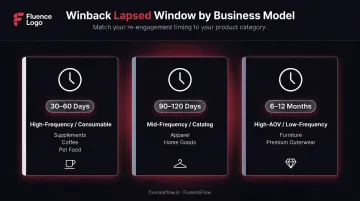
These aren't arbitrary cutoffs — they're calibrated to buying behavior. Klaviyo's official documentation recommends basing your win-back trigger on your store's average buying cycle, using the Average Time Between Orders as your anchor.
A practical method: pull your order history, look at customers who made a second purchase, and find the point where 70–85% of them placed that order. Set your win-back trigger just after that window closes.
At-Risk vs. Lapsed — Why the Distinction Matters
That trigger window also reveals a critical segmentation opportunity: not everyone who's disengaging has fully lapsed yet.
At-risk customers are still within their expected repurchase window but showing declining engagement (fewer opens, no clicks, no recent site visits). Lapsed customers have passed that window entirely with no action taken.
Catching at-risk contacts early — with a lighter-touch replenishment prompt or product reminder — reduces how many reach the full win-back stage. That keeps your stronger offers reserved for the contacts who genuinely need them to convert.
Seasonal Buyers Are a Separate Segment
Customers who reliably buy around specific holidays or seasons — think gift-driven brands or limited-release products — should not be flagged as lapsed in the off-season. Sending win-back emails to someone who always buys from you in November but never in July isn't re-engagement. It's noise that trains them to unsubscribe.
Identify seasonal buyers as their own segment. Reserve re-engagement timing for when their purchase window approaches.
How to Structure a Win-Back Email Sequence
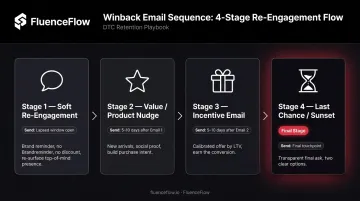
The core principle is simple: start with the least aggressive message and escalate only if the subscriber doesn't respond.
Jumping straight to a 25% discount in Email 1 trains customers to wait for offers before buying — and erodes margins on contacts who would have returned without one. Klaviyo's 2024 guidance recommends leading with social proof and value messaging before introducing any monetary discount.
Email 1: The Soft Re-Engagement
Send at the point your lapsed window opens. The goal: a brand reminder with no hard sell.
This email surfaces what the customer engaged with before — product category, past purchase, or browsing behavior — and invites them back to see what's new. No discount. No urgency. Just a direct, no-discount check-in.
Subject line direction: curiosity or nostalgia ("Remember this?" / "You left before seeing these") rather than promotional.
Email 2: Value or Product-Led Nudge
Send 5–10 days after Email 1, only if Email 1 went unopened. The goal: remind them why they chose you.
Lead with new arrivals, best sellers, or social proof. This is the "here's what you've been missing" email. You can include a soft urgency element — limited quantities, a new collection drop — but still no discount.
Email 3: The Incentive Email
Send 5–10 days after Email 2, for non-responders only. The goal: convert with an offer calibrated to customer value.
This is where an incentive belongs — only for contacts who didn't respond to the first two emails. Offer size should reflect LTV:
- High-value past buyers: larger dollar-amount offer
- Lower-value or single-purchase contacts: smaller discount or free shipping test
A Return Path study — a classic benchmark still referenced by Klaviyo practitioners — found that dollar-off subject lines generated nearly twice the read rate of percentage-off subject lines. Worth testing as a variable in this email specifically.
Email 4: The Last Chance / Sunset Email
Send 5–7 days after Email 3, if they've gone quiet through Email 3. One final ask before suppression.
Be transparent. Let the subscriber know this is your last outreach unless they opt back in. Give them two clear options:
- Claim a final offer and stay on the list
- Confirm their preference to unsubscribe
Give subscribers control over the decision. They're more likely to act — and if they don't, you've earned a clean unsubscribe rather than a spam complaint.
FluenceFlow builds win-back flows in Klaviyo customized around each client's repurchase behavior and unit economics — not generic templates. Timing, offer depth, and audience segmentation reflect the actual business model of the brand. For consumable brands like coffee or supplements, that often means shorter lapsed windows and urgency-focused sequencing. For high-AOV brands, it means extended nurture and offer strategies that don't rely on deep discounts. Book a free Klaviyo audit to see what a custom win-back sequence could look like for your store.
Win-Back Email Best Practices That Actually Work
Segment Before You Send
Sending the same sequence to a $1,000 LTV customer and a one-time buyer who spent $35 once is a strategic mistake. Before launching any win-back flow, group lapsed contacts by:
- LTV tier (high, mid, low)
- Purchase frequency and order count
- Recency (how far past the lapsed window they are)
This allows you to calibrate offer depth, message tone, and urgency appropriately. High-value customers deserve your best offer. First-and-only buyers might not warrant a discount at all.
Subject Lines Are the Gatekeepers
Subject line approaches that consistently drive re-engagement opens:
- Emotional / nostalgic: "It's been a while…"
- Curiosity-driven: "Something new you haven't seen yet"
- Benefit-forward: "Here's what's changed since your last order"
- Urgency-based: "Your offer expires in 48 hours" (Email 3–4 only)
Avoid leading with urgency in early emails — it signals discount before you've given the subscriber a reason to care.
Keep Copy Concise and CTAs Singular
Lapsed subscribers have a lower threshold for engagement. An email cluttered with five product categories, a blog post link, and a loyalty program banner doesn't win anyone back.
Stick to these rules:
- One CTA per email — no competing actions
- Copy that fits above the fold on mobile
- A single offer or content hook, not a menu of options
Test One Variable at a Time
A/B testing is valuable, but only if you're isolating variables correctly. For win-back sequences, prioritize testing:
- The inactivity threshold that triggers the sequence
- The gap between emails (5 days vs. 10 days)
- Discount present vs. absent in Email 3
- Dollar-off vs. percentage-off in the incentive email
Run each test long enough to reach statistical significance before changing anything else.
Know When Sunsetting Is the Right Call
If a subscriber doesn't re-engage after a full 3–4 email sequence, remove them from active sends. Validity's 2025 guidance directly links prolonged inactivity to negative mailbox provider signals — higher spam-trap exposure, weaker inbox placement, and potential blocklist risk. Every disengaged contact left on your active list dilutes your domain's sender reputation and drags down open rates for the subscribers who actually want to hear from you.
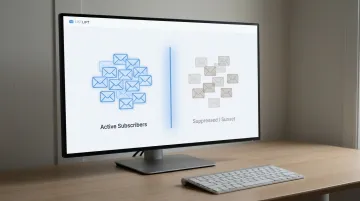
Move non-responders to a suppression list, document the sunset date, and revisit them only if they take a meaningful action — like a site visit or purchase — that warrants re-entry into the flow.
Win-Back Email Examples Broken Down by Approach
The most effective win-back campaigns layer multiple approaches across a sequence rather than committing to a single style. Here are the three main types:
The Reminder Email (Brand-Led)
Best for Email 1. Surfaces products the customer interacted with, highlights what's new or trending, and reconnects without pressure. Works especially well for customers who lapsed because life got busy — not because they were dissatisfied.
Subject line direction: nostalgic or curiosity-driven, not promotional. "You started something here" outperforms "SALE: Come Back" at this stage.
The Incentive Email (Offer-Led)
Best for Email 3, for subscribers who haven't responded to softer messaging. Lead with a clear, specific offer — dollar amount tends to outperform percentage at the subject line level. Key elements:
- Prominent offer above the fold
- Simple, short copy
- Single CTA
- Urgency element (expiration date or limited quantity)
Calibrate the offer to LTV. A customer who's spent $800 across multiple orders merits a stronger incentive than someone who made one small purchase eighteen months ago.
The "Last Chance" / Sunset Email
Transparent messaging works better than emotional manipulation here. Let the subscriber know clearly: this is the last email unless they opt back in. Then give them two clean options — re-engage or unsubscribe.
Giving people control over a decision increases the likelihood they'll make one. Both outcomes work in your favor:
- Contacts who click to stay are genuinely warm leads
- Contacts who unsubscribe improve your deliverability
- Silence — the third option — is the only one that hurts you
Frequently Asked Questions
What are win-back campaigns?
Win-back campaigns are automated email sequences triggered by inactivity — such as a lapsed repurchase window — and sent to past buyers or inactive subscribers in a deliberate, escalating sequence. They're built around behavior, not calendar blasts.
What are some good examples of win-back emails?
The four main approaches are: brand-led reminder emails, product-led value nudges, incentive-driven offer emails, and transparent sunset emails. The strongest win-back campaigns layer all four across a 3–4 email sequence rather than using just one style.
What is the most effective email marketing campaign for recovering lapsed customers?
Win-back flows are among the highest-converting email strategies because they target people who've already bought — not cold leads. What separates effective sequences from ineffective ones is segmentation, timing anchored to the actual repurchase window, and the right incentive at the right stage — not a blanket discount to everyone.
How many emails should be in a win-back sequence?
Most DTC brands should run 3–4 emails: a soft reminder, a value-led email, an incentive email, and a final sunset email. Klaviyo recommends 2–5 as a range, while Mailchimp suggests 2–3. More than 4 risks deliverability issues and signals to clearly disinterested contacts.
When should you stop sending win-back emails?
Once a contact completes the full sequence without opening, clicking, or purchasing, move them to a suppressed segment and stop sending. This protects your sender reputation and keeps your list metrics clean.
Should you always include a discount in a win-back email?
No. A discount in Email 1 trains customers to wait for offers before buying. Start with brand reminders and value-led content. Introduce an incentive only if earlier emails don't drive re-engagement — and size the offer based on the customer's purchase history, not a flat percentage for everyone.