Introduction: Why Brand Retention is Your Secret Revenue Engine
Acquiring a new customer costs 5-25x more than retaining an existing one, according to Harvard Business Review.
Yet most DTC brands still pour the bulk of their budget into acquisition (Facebook ads, Google Shopping, influencer partnerships) while retention runs on autopilot: generic email templates and forgotten loyalty programs.
That gap shows up in repeat purchase rate, customer lifetime value (CLV), and churn. Brand retention strategies close it by delivering consistent value across email, SMS, and every post-purchase touchpoint. When you build those systems around real customer behavior and unit economics instead of copy-paste templates, retention becomes a revenue engine that compounds month after month.
Here are five retention strategies that work in practice for DTC brands.
Key Takeaways: What You'll Learn About Brand Retention Strategies
- Automated email and SMS flows drive 30-60% of email revenue when built around behavior and unit economics
- Zero-party data collection powers personalization that lifts repeat purchase rates
- Strategic loyalty programs build buying habits that raise customer lifetime value
- The 30-day post-purchase window is the most overlooked retention opportunity
- Track Customer Retention Rate, Customer Lifetime Value, and Repeat Purchase Rate to gauge what works
Strategy 1: Build Behavioral Email & SMS Automation Systems
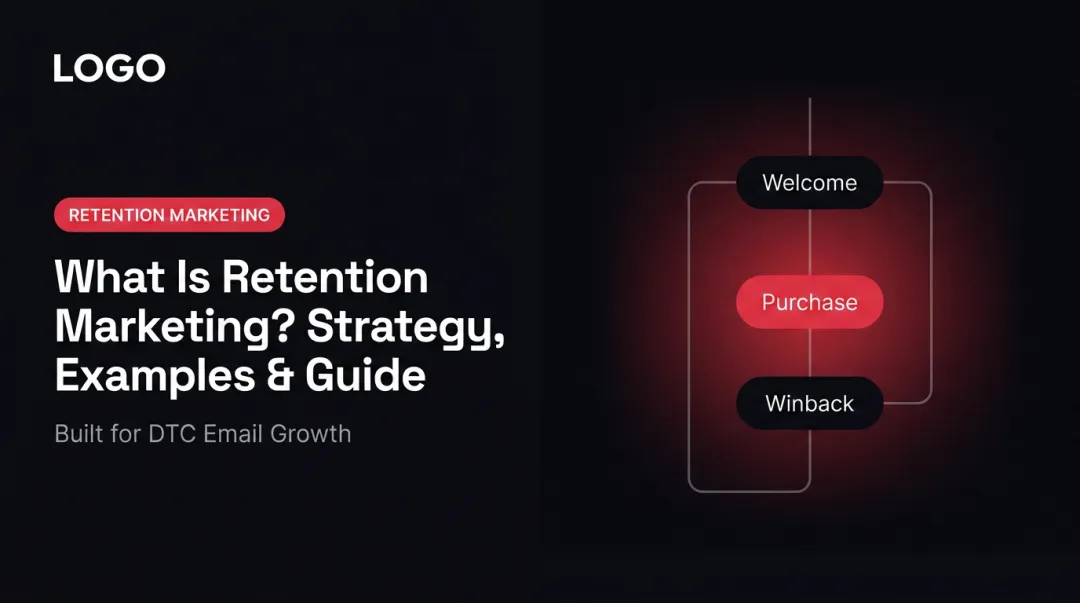
Retention-focused automation goes far beyond welcome series and abandoned cart recovery. The most effective systems anticipate customer needs based on purchase history, browsing behavior, product usage cycles, and each brand's specific unit economics.
Essential Retention Flows
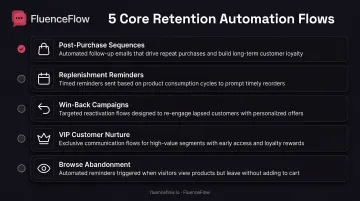
Build these five flows first:
- Post-purchase sequences - Convert first-time buyers into repeat customers before they forget your brand exists
- Replenishment reminders - For consumables, time messages to when products actually run out, not the generic timing on package labels
- Win-back campaigns - Re-engage lapsed customers before competitors do
- VIP customer nurture - Build relationships with high-value buyers through exclusive content and early access
- Browse abandonment - Recover interest from engaged visitors who didn't add to cart
Segment by Unit Economics
The structure of your flows should reflect your business model:
High AOV/Low Frequency ($400+ products):
- Use 8-15 touchpoints to support long decision cycles
- Lead with education and confidence-building content
- Deploy post-purchase cross-sell systems to maximize lifetime value
- Avoid discount-heavy messaging that cheapens premium positioning
Low AOV/High Frequency (consumables, CPG):
- Prioritize aggressive upfront conversion since hesitation kills sales
- Time replenishment reminders to actual product usage, not arbitrary intervals
- Build progressive rewards that make switching feel costly
- Launch lapsed-buyer winbacks before competitors capture the customer
One coffee brand switched from generic monthly reminders to a 45-day replenishment flow tied to average bag consumption. Repeat purchase rates rose within 90 days.
Omnisend's 2025 research found that automated emails generated 37% of email-driven sales from just 2% of email volume, while automated SMS produced 18% of SMS orders from only 9% of sends. That efficiency only shows up when flows are built around your specific customer journey data.
FluenceFlow builds custom flows around each brand's unit economics and behavioral data, rather than deploying one-size-fits-all playbooks.
Strategy 2: Implement Zero-Party Data Collection & Hyper-Personalization
Zero-party data is information customers intentionally share with you: product preferences, purchase intent, skin concerns, occasion context, or goals. Unlike behavioral data you collect passively through cookies and tracking, zero-party data is volunteered by customers who want a more relevant experience.
Collection Methods That Work
Capture preference data throughout the journey:
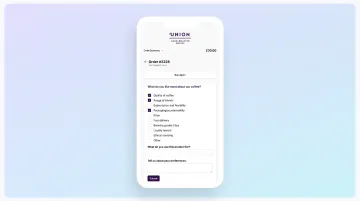
- Post-purchase surveys - Ask "What's your primary use case?" or "What challenge are you solving?"
- Preference centers - Let customers choose email frequency, product categories, and content themes
- Quiz funnels - Guide product selection while capturing goals and preferences
- Occasion-based popups - Ask whether they're shopping for a wedding, work, or casual use
- Review requests with context - "How did this product fit your needs?" reveals intent
Turn Data Into Personalization
Once collected, use zero-party data to segment and customize:
- Email list segmentation - Separate customers by stated preferences, not just purchase history
- Product recommendations - Tailor suggestions to goals and use cases, not just "frequently bought together"
- Messaging and imagery - Match content themes to customer values and lifestyle
- Promotional timing - Send offers when customers indicated they're likely to buy again
Beauty brand Glossier uses post-purchase surveys asking "What's your skin concern?" to segment customers into targeted email journeys. McKinsey reports that 78% of consumers said personalized content made them more likely to repurchase. Effective personalization typically produces a 10-15% revenue lift.
Personalization has to go further than first names in subject lines. Every touchpoint, from product recommendations to email creative to promotional cadence, should reflect what customers told you matters to them.
Strategy 3: Design Loyalty Programs That Drive Habitual Behavior
Effective loyalty programs reward behaviors that matter to your business model, not generic actions copied from competitors. The structure must align with how customers naturally buy from you.
Program Structure Options
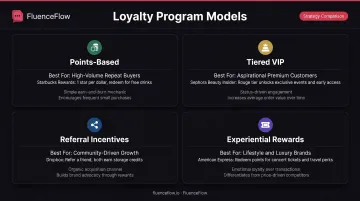
Choose the model that fits your economics:
| Model | Best For | Example |
|---|---|---|
| Points-based | High-frequency purchases | Earn 1 point per dollar, redeem at thresholds |
| Tiered VIP | High-AOV brands | Bronze/Silver/Gold with escalating perks |
| Referral incentives | Community-driven brands | Give $20, get $20 for successful referrals |
| Experiential rewards | Premium brands | Early access, exclusive events, concierge service |
Outdoor retailer REI's Co-op membership charges a $30 lifetime fee and returns 10% of eligible purchases annually. The psychological commitment of paying to join raises lifetime value versus non-members. Customers feel invested in the relationship.
Integration Throughout the Journey
Loyalty programs fail when they're invisible. Make rewards prominent:
- Display point balances on product pages
- Show tier status and next-level benefits in cart
- Highlight rewards in email signatures
- Feature the program in site navigation
- Celebrate milestones with surprise perks
McKinsey found that customers who redeem loyalty points generate 15-25% higher annual revenue through increased frequency and basket size.
Still, two-thirds of established loyalty programs fail to deliver value. Rewards are too hard to earn, benefits miss what customers want, or redemption is overly complicated.
Avoid these mistakes:
- Setting a 1,000-point threshold for a $10 reward when average order value is $50
- Offering free shipping as the only perk when you already unlock it at a low threshold
- Letting points expire before customers can realistically redeem them
Strategy 4: Master the Post-Purchase Experience Window
The 30 days after a customer's first purchase is when they're evaluating whether they made the right decision. This window determines whether they become a one-time buyer or a repeat customer. Yet most DTC brands send a shipping confirmation, then go silent until the next promo blast.
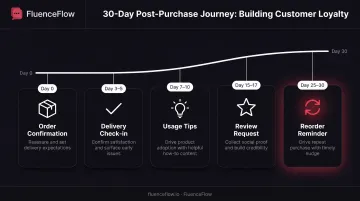
Build a 30-Day Post-Purchase Sequence
Map these touchpoints into your post-purchase email and SMS flows:
- Keep tracking on-brand with tools like Narvar or Malomo so updates live on your domain, not a generic carrier page
- Check in 3–5 days after delivery with a simple "How's everything working out?"
- Send usage tips, care instructions, or product-tied recipes and workouts
- Request a review 5–7 days post-delivery while the experience is still fresh
- Add an unexpected thank-you note, sample, or discount on the next order
Peloton runs a structured 30-day onboarding series with workout tips, community stories, and milestone celebrations. Customers who engage with that content stick around at higher rates through the first 90 days than those who ignore it.
Those same early touchpoints are also when you set reorder expectations.
Cue the Next Purchase Before They Run Out
If you sell consumables, say when the product should run out and offer a calendar reminder or subscribe-and-save option while motivation is still high.
Strategy 5: Create Win-Back Campaigns for At-Risk Customers
Even with strong retention systems, some customers will lapse. Identify them early and re-engage before they switch to a competitor or forget your brand entirely.
Identify At-Risk Customers
Track these signals:
- Days since last purchase relative to your average purchase cycle
- Declining email engagement (opens, clicks, or both)
- Browse activity without purchases
- Cancelled subscriptions or declined payment methods
For consumable brands, build your at-risk definition around expected replenishment timing. A customer who hasn't reordered coffee in 60 days when your average is 30 days is lapsed. For premium brands with 6-month purchase cycles, 90 days of silence isn't lapsed. It's normal.
Win-Back Campaign Structure
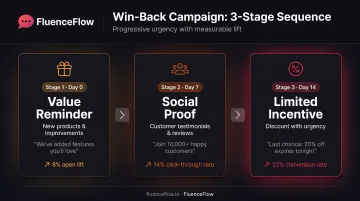
Deploy a progressive three-email series:
- Value reminder (Day 0) - "We miss you" message highlighting new products, popular items, or brand improvements since their last purchase
- Social proof (Day 7) - Share customer testimonials, reviews, or community stories that rebuild trust
- Limited-time incentive (Day 14) - Offer a discount or free shipping with urgency: "Come back in the next 5 days"
Subscription box service FabFitFun created a three-email win-back series for cancelled subscribers, starting with new product highlights, followed by exclusive member testimonials, ending with a limited-time reactivation discount. The campaign recovered 18% of churned subscribers, revenue that would have been permanently lost.
Strategic note: Start with value before discounts. If your first message is 20% off, you're training customers to wait for deals. Lead with reasons to return; escalate to incentives only if needed.
How to Measure Brand Retention Success: Key Metrics That Matter
You can't improve what you don't measure. Three metrics form the foundation of retention analysis:
Customer Retention Rate (CRR)
Formula: [(Customers at end of period - New customers acquired) / Customers at start of period] x 100
This shows the percentage of existing customers who remained active during the period. Shopify reports that Decile's 2023 ecommerce benchmarking data found an average retention rate of 30% across brands on its platform. Anything above that baseline is strong; 50%+ is excellent for DTC ecommerce.
Customer Lifetime Value (CLV)
Formula: Average Order Value x Purchase Frequency x Average Customer Lifespan
CLV tells you how much revenue a customer generates over their entire relationship with your brand. Track CLV by acquisition channel and customer cohort to identify which sources bring high-value customers versus one-time bargain hunters.
If your AOV is $75, customers buy 3 times per year, and the average lifespan is 2 years, your CLV is $450. Increasing purchase frequency from 3 to 4 times per year raises CLV to $600, a 33% increase from a single additional purchase.
Repeat Purchase Rate (RPR)
Formula: (Number of customers who purchased more than once / Total customers) x 100
RPR shows what percentage of your customer base comes back. If you have 1,000 customers and 250 made a second purchase, your RPR is 25%.
Small improvements compound fast. Moving from 20% to 30% repeat purchase rate doesn't just add 10 percentage points. It can double profitability by cutting reliance on expensive acquisition while growing revenue from customers you've already paid to acquire.
Beyond the headline numbers, compare monthly cohorts (customers acquired in January 2024 vs. February 2024) to see if retention improves as you roll out new strategies. Cohort views surface whether changes are working before they show up in aggregate metrics.
Frequently Asked Questions
What are five retention strategies?
The five core strategies are behavioral email and SMS automation, zero-party data personalization, loyalty programs tied to your model, a strong post-purchase experience in the first 30 days, and proactive win-back campaigns for lapsed customers.
What are the 8 C's of customer retention?
The 8 C's are Consistency, Communication, Convenience, Customization, Community, Commitment, Customer Service, and Celebration. Together they cover reliable experiences, proactive outreach, personalization, loyalty value, support, and milestone recognition.
What are the three R's of customer retention?
The three R's are Relevance (value that matters to each customer), Recognition (acknowledging loyalty and milestones), and Rewards (points, discounts, exclusive access, or experiences that drive repeat purchases).
Conclusion: Turning Retention Strategy into Revenue Reality
Retention strategies compound over time. A 5% improvement in repeat purchase rate this quarter becomes 15% revenue growth over 12 months and 30%+ growth over 24 months as more customers make second, third, and fourth purchases.
Start by auditing your current retention metrics: What's your Customer Retention Rate, Repeat Purchase Rate, and Customer Lifetime Value by cohort? Identify your biggest gap: missing automation, weak personalization, or no loyalty program.
Then implement one core strategy in the next 30 days:
- Build your first post-purchase flow
- Launch a preference-center popup to collect zero-party data
- Design a simple points program
Start with one system and optimize it before adding complexity.
If you need help building a custom retention system with performance guarantees, FluenceFlow works with DTC brands to implement these strategies based on unit economics rather than generic playbooks. Your retention engine gets built for your business model, not borrowed from someone else's.