Yes, popups can be annoying. But they remain essential because they build your owned audience, subscribers you can reach directly without platform intermediation or rising ad costs. For DTC brands navigating privacy changes and reduced tracking, email and SMS have become more valuable than ever.
This guide breaks down real popup examples, conversion-focused design principles, and implementation best practices so you can turn more website traffic into revenue-generating subscribers.
Key Takeaways
- Discount popups convert 41% better than non-discount offers (2.4% vs 1.7%)
- Delayed triggers beat immediate displays by 26% (2.4% vs 1.9%)
- Mobile-first design matters: phones drive 78% of retail site visits
- Spin-to-win and other gamified formats convert 75% higher (3.5% vs 2.0%)
- Welcome flows decide ROI; popups only pay off when downstream email converts
Why Email Popups Still Work in 2025
The Benchmark Reality
Omnisend's 2025 data from 1.24 billion popup displays reveals clear performance tiers:
- Under 1.5%: Underperforming
- 1.5-3%: Average
- 3-5%: Good
- 5%+: Excellent
Different popup formats drive different results:
- Wheel-of-Fortune gamified forms: 3.5% average
- Multi-step forms: 2.3% average
- Single-step forms: 2.0% average
- Exit-intent popups: 1.8% average
The ROI Behind a 3% Submit Rate
Klaviyo recommends targeting 3%+ submit rates while assessing subscriber quality. Example calculation:
- 10,000 monthly site visitors × 3% conversion = 300 new subscribers
- 300 subscribers × $2.65 welcome series revenue per recipient = $795
- Over 12 months: 3,600 subscribers adding ongoing campaign and flow revenue
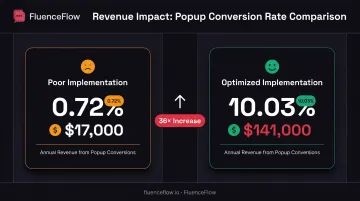
The real value compounds when these subscribers enter replenishment flows, winback campaigns, and VIP segments. One brand increased campaign revenue from $364 to over $13,000 monthly after implementing an optimized popup alongside better campaigns. That's a 36x increase in 30 days.
Mobile Traffic Dominates
Smartphones represented 78% of retail site visits in Q3 2025. Your popup has to work on small screens, or you miss most of your list-growth opportunity.
Data shows mobile-optimized and cross-device popups each average 2.2% conversion, while desktop-only implementations lag at 1.4%.
Privacy Changes Increase Email's Value
Third-party cookies are disappearing. iOS tracking restrictions continue tightening. Email subscribers represent a direct relationship platforms cannot intermediate. In February 2025, 26.9% of US/UK marketers reported email delivered their best ROI.
The popup is your primary tool for building this owned channel before visitors leave your site.
Essential Elements of High-Converting Email Popups
Every effective popup combines five core elements:
- Compelling value proposition: why should visitors give you their email?
- Strategic timing and triggers: when does it appear?
- Low-friction form design: how easy is it to complete?
- Clear call-to-action: what happens next?
- Brand alignment: does it feel authentic to your store?
Headline strategy
Your headline must balance clarity with engagement. The best headlines:
- State the benefit immediately ("Get 15% off your first order")
- Match brand voice (casual for streetwear, refined for luxury)
- Avoid vague language ("Join our newsletter" tells visitors nothing)
- Create urgency when appropriate ("Save before it's gone")
Visual Design Principles
Whitespace and hierarchy:
- Don't cram everything into one dense block
- Use visual hierarchy to guide eyes: headline → benefit → form → CTA
- Leave breathing room around form fields and buttons
Color and contrast:
- WCAG 2.2 requires 4.5:1 minimum contrast for normal text
- Your CTA button should stand out from background
- Brand colors create recognition, but don't sacrifice readability
Mobile-first considerations:
- WCAG 2.2 specifies 24×24 pixel minimum touch targets, with 44×44 pixels recommended
- Buttons must be large enough for thumbs, not mouse cursors
- Test on actual devices, not just browser resize
- Close buttons must be obvious and easy to tap
Imagery choices:
Wisepops data shows 5.71% conversion with images versus 3.98% without (a 43% relative lift). Product photos work for transactional offers; lifestyle imagery fits aspirational brands.
Timing and Trigger Strategies
Timing significantly impacts conversion:
- Immediate display: 1.9% average (often feels intrusive)
- 6-10 second delay: 2.4% average (26% better performance)
- Scroll-triggered (25-70% depth): 2.1% average; Omnisend recommends 25% scroll for product pages, 50% for content
- Exit-intent: 1.8% average (last chance to capture abandoning visitors)
- Behavior-based: Time on page, pages viewed, cart value thresholds
Field count and friction
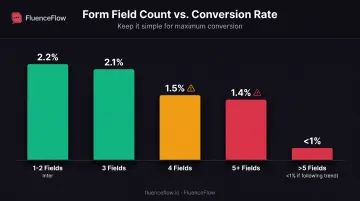
Omnisend found clear friction patterns:
- 1-2 fields: 2.2% conversion
- 3 fields: 2.1% conversion
- 4 fields: 1.5% conversion
- 5+ fields: 1.4% conversion
Start with email only. Add SMS or preferences in step two if segmentation justifies the friction cost.
Incentive Strategy
Discount popups average 2.4% versus 1.7% without a discount (a 41% relative advantage). The right incentive still depends on your unit economics:
For high-margin products:
- Percentage discounts (10-20% off)
- Dollar-value discounts ($25 off $100)
- Free shipping thresholds
For low-margin products:
- Free shipping only
- Free gift with purchase
- Exclusive early access
For complex/expensive products:
- Educational content (buying guides, comparison charts)
- Free consultation or quiz
- VIP early access to launches
Calculate your customer acquisition cost and lifetime value before deciding. If your popup discount costs $15 per conversion but your first-order contribution margin is $40 and your customer lifetime value is $200, you have room to be aggressive. If margins are tight, protect them.
Connect the popup to your retention system
The popup is only the entry point. Welcome flows, abandoned cart sequences, and segmented campaigns decide whether new subscribers become profitable customers. Build the capture offer and the first 30 days of lifecycle email as one system, not separate projects.
15 Email Popup Examples That Drive Results
Discount-Driven Popup Examples
1. American Grazed Beef: First-Order Urgency
This food brand's popup offers 10% off the first order with bold urgency messaging: "Save it before it's gone!" The design pairs appetizing beef imagery with two clear CTAs: "CLAIM 10% OFF" and "NO, THANKS."
The popup ties into a retention system that helped the brand generate $1.5M+ in email revenue, with email contributing 48.6% of total store revenue.
What makes it work:
- Clear monetary benefit stated upfront
- Urgency language creates FOMO
- Food imagery reinforces quality and appeal
- Two-button design respects visitor choice
2. Sartoro: Occasion-Based Segmentation
This luxury menswear brand offers $102 off but adds a strategic twist: visitors select their shopping purpose: "Upcoming Event," "Your Wedding," "Work / Business," or "Social / Casual." This zero-party data feeds segmented welcome flows and product recommendations.
What makes it work:
- High-value discount matches premium positioning and AOV
- Occasion selection provides immediate segmentation
- Elegant design aligns with luxury brand identity
- Data collected improves all downstream messaging
3. Zarina: Text-Only Simplicity
This popup strips away imagery entirely, using clean typography to offer 10% off first order. The minimalist approach reduces load time and visual clutter.
Why simplicity wins:
- Fast loading (critical for mobile)
- Zero distractions from the core offer
- Works across devices and connection speeds
4. Carroll's Corn: Flavor-Based Preference Capture
Beyond the 10% off incentive, this popup asks: "What flavor are you craving?" with four options: Sweet Caramel, Cheesy Cheddar, Classic Butter, or Zesty Ranch. The flavor preference guides product recommendations and email personalization.
What makes it work:
- Engages visitors with a preference question
- Flavor data improves product cross-sells
- Interactive format feels less transactional
- Combines discount with useful segmentation
Educational Popup Examples
5. Brightland: Free Gift for Email Capture
This premium olive oil brand offers a free pouring spout (a functional product accessory) in exchange for email signup. The popup uses elegant product photography and emphasizes the gift's utility.
Why the free gift converts:
- Gift has real value and product relevance
- No discount needed (protects premium pricing)
- Accessory nudges a product purchase so the gift gets used
- Fits a sophisticated brand position without cheapening it
6. Grind: Coffee-Focused Value Proposition
This coffee brand's popup focuses on coffee expertise and exclusive offers rather than immediate discounts. The value proposition emphasizes early access to new blends and brewing tips.
Why this approach fits:
- Appeals to enthusiasts who want knowledge, not only deals
- Positions the brand as expert, not just vendor
- Builds the relationship before asking for a sale
- Suits products with strong repeat-purchase potential
Gamified Popup Examples
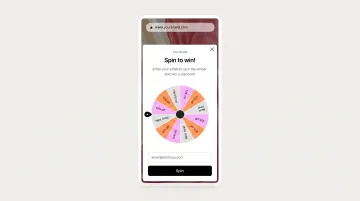
7. Spin-to-Win Wheel
Gamified wheel-of-fortune popups average 3.5% conversion versus 2.0% for standard single-step forms. That's a 75% relative improvement.
Why gamification works:
- Creates moment of engagement and anticipation
- Feels like a game, not a transaction
- Variable reward (mystery discount) increases curiosity
- Reduces perceived friction of email submission
Best practices for gamified popups:
- Ensure mobile wheel is easy to spin
- Offer genuine value in all prize slots (even "lowest" prize should be worthwhile)
- Display prize immediately and deliver code via email
- Don't overuse; works best for first-time visitors
Exit-Intent Popup Examples
8. Olipop: Exit-Intent Retention
This beverage brand uses exit-intent technology to display a retention-focused headline when visitors move to close the tab. The messaging shifts from standard acquisition to addressing objections and creating urgency.
Why exit-intent fits here:
- Targets visitors already leaving (low downside risk)
- Uses a different message than the entry popup
- Last clean shot to capture the visitor
- Can support a stronger offer than the first popup
9. Cart-Abandonment Exit-Intent
When visitors with items in cart try to leave, a targeted exit popup can offer:
- Additional discount or free shipping
- Reminder of cart contents
- Limited-time urgency ("Offer expires in 15 minutes")
- One-click return to checkout
Best practices for exit-intent:
- Only show to engaged visitors (scroll depth, time on site, cart value)
- Make offer stronger than standard popup
- Create genuine urgency
- Ensure easy dismissal so visitors who truly want to leave can
Industry-Specific Popup Examples
10. OSEA: Skincare with Visible Controls
This skincare brand's popup includes clear close controls and gentle language. The design emphasizes clean beauty credentials and uses calming imagery.
What makes it work:
- Respects visitor autonomy with visible close button
- Brand messaging (clean beauty) integrated into popup copy
- Soft color palette matches product positioning
- Mobile-optimized layout
11. Wild Fork Foods: Free Shipping Threshold
This food delivery brand promotes free shipping rather than percentage discounts, protecting margins on lower-AOV items while incentivizing larger basket sizes.
Why free shipping works:
- Removes a common checkout objection
- Threshold pushes larger orders
- Often fits delivery economics better than blanket discounts
- Clear consent disclosure adds a trust signal
12. Minecraft Store: One-Field Gaming Simplicity
The official Minecraft merchandise store uses a single-field form offering 10% off first order. The design incorporates game aesthetics while maintaining simplicity.
What makes it work:
- One field reduces friction to absolute minimum
- Gaming aesthetic delights target audience
- Clear value proposition for merchandise buyers
- Fast implementation and testing
Multi-Step and Advanced Popup Examples
13. Capture: Two-Step Email + SMS
A timed two-step popup (email first, optional SMS second) plus an exit offer increased submissions by 638.57%.
Why the two-step structure wins:
- Step one captures email (primary goal)
- Step two adds SMS without losing the email if someone bails
- Exit offer creates a second chance
- Segmentation upside can justify the extra step
14. Wilkinson Sword: Discount + Product Interest
This grooming brand offers 20% off and asks visitors to select product interest categories. The segmented welcome series achieved a 40% purchase rate (though this metric measures email conversion, not popup rate).
What makes it work:
- Strong discount incentive
- Product-interest selection improves recommendations
- Segmentation drives relevant welcome series
- Multi-step format worth friction for higher-value subscribers
15. Josh Wood Colour: Post-Submit Success Screen
This hair care brand displays the discount code and a prominent "SHOP NOW" CTA immediately after popup submission, with no waiting for email delivery.
Why the success screen matters:
- Instant gratification (code appears immediately)
- Shop CTA opens a same-session conversion path
- Cuts discount-code friction
- Confirms signup and sets expectations in one screen
Pattern Recognition Across Examples
Discount examples convert reliably when:
- Offer is clear and valuable (10-20% off, free shipping)
- Design is mobile-optimized
- Timing allows engagement before interruption
Educational examples work best when:
- Product requires research or consideration
- Brand positioning is premium (discount would cheapen)
- Repeat purchase value justifies nurture investment
Gamification increases engagement but:
- Requires more development and testing
- Can feel gimmicky if poorly executed
- Mobile experience must be flawless
Exit-intent recovers abandoning visitors when:
- Offer is stronger than entry popup
- Messaging addresses objections
- Target audience is qualified (engaged visitors, cart value)
Email Popup Best Practices by Business Type
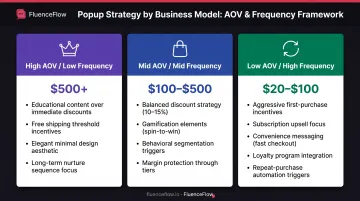
Popup tactics that convert a coffee brand can cheapen a luxury catalog. Match the offer, creative, and follow-up to your AOV and how often customers buy.
High AOV / Low Frequency Businesses
Characteristics: Premium products, luxury goods, purchases over $400, long decision cycles, 8-15 touchpoints before purchase.
Popup strategy:
- Avoid aggressive discounts that cheapen premium positioning
- Offer educational content (buying guides, style consultations)
- Emphasize free shipping thresholds over percentage discounts
- Use elegant, brand-aligned design
- Connect to extended nurture flows, not immediate conversion pressure
Example approach:
- Sartoro's $102-off popup with occasion segmentation works because AOV supports it
- Brightland's free gift maintains premium positioning
- Consultation offers for custom or complex products
Why this works: High-consideration buyers research extensively. Your popup should begin a relationship, not force an immediate discounted sale.
Mid AOV / Mid Frequency Businesses
Characteristics: Large catalogs, seasonal products, $75-$250 AOV, tight margins, moderate repeat purchase.
Popup strategy:
- Balance discount offers with product education
- Test gamification to increase engagement
- Use preference questions to direct traffic to bestsellers
- Consider free gift with purchase instead of percentage discount
- Protect margins while incentivizing first purchase
Example approach:
- Carroll's Corn's flavor-preference popup combines discount with useful segmentation
- Multi-step popups that identify product interest categories
- Spin-to-win formats that create engagement
Why this works: Margins may not support aggressive discounts, but you need to compete for attention. Balancing incentive with segmentation maximizes lifetime value.
Low AOV / High Frequency Businesses
Characteristics: Consumables, CPG products, under $50 AOV, fast replenishment cycles, subscription potential.
Popup strategy:
- Emphasize convenience (free shipping, fast delivery)
- Promote subscription options with discount
- Use aggressive first-order incentives (high LTV justifies it)
- Focus on repeat-purchase messaging
- Loyalty program enrollment
Example approach:
- Coffee brands offering first-order discount plus subscription savings
- Free shipping on subscription orders
- Rewards program signup instead of one-time discount
Why this works: First purchase is often loss-leader. Real profit comes from replenishment flows and subscription retention.
Calculate Your Right Incentive
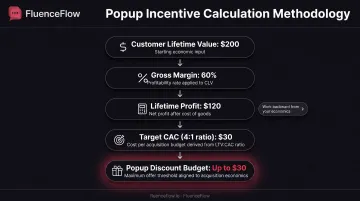
Shopify recommends comparing CAC to CLV × gross margin, targeting a 3:1 to 5:1 CLV/CAC ratio.
Example calculation:
- Customer lifetime value: $200
- Gross margin: 60%
- Lifetime profit: $120
- Target CAC (at 4:1 ratio): $30
- Popup discount budget: Up to $30 if it converts browsers to buyers
Work backward from your economics rather than copying competitor discount percentages.
When to Partner with Specialists
The right popup still changes by traffic source, segment, and journey stage. Brands that tie the offer to unit economics, not opt-in rate alone, grow the list without giving away margin.
When popups need to connect to welcome flows, segments, and lifetime value, a retention partner like FluenceFlow builds that system around your numbers instead of a generic template.
Common Email Popup Mistakes to Avoid
Appearing Too Quickly
Immediate popups convert at 1.9% versus 2.4% for 6-10 second delays, a 26% performance gap. Instant interruption increases frustration and reduces engagement. Give visitors a moment to orient before you ask for the email.
Better approach:
- Wait at least 6–10 seconds; 15–30 seconds often performs better
- Use scroll triggers (25% for product pages, 50% for content)
- Implement engagement triggers (pages viewed, time on site)
- Save exit-intent for final retention attempt
Poor Mobile Experience
Most ecommerce traffic comes from smartphones, so mobile failures kill conversion fast:
Common mobile mistakes:
- Buttons too small to tap accurately
- Close button hidden or too small
- Popup covers entire screen with no scroll
- Form fields don't trigger mobile keyboards properly
- Images load slowly on cellular connections
Build the mobile version first with a few non-negotiables:
Mobile best practices:
- Minimum 24×24 pixel touch targets (44×44 recommended)
- Obvious, easy-to-tap close control
- Test on actual devices, not just browser resize
- Optimize image file sizes
- Ensure popup doesn't break site functionality
Generic, Non-Segmented Popups
Showing identical popups to all traffic wastes conversion potential:
Missed segmentation opportunities:
- New versus returning visitors (don't ask returning visitors to "join" again)
- Different traffic sources (paid, organic, social, email)
- Mobile versus desktop
- Shoppers with items in cart versus casual browsers
- Product category interest
Match the offer to the visitor instead:
Better approach:
- Show welcome discount to first-time visitors only
- Display cart-recovery messaging to abandoning visitors with items in cart
- Offer loyalty program to returning visitors
- Vary message by traffic source when feasible
Weak or Confusing Value Propositions
Compare these headlines:
Weak: "Join our newsletter"
- No benefit stated
- "Newsletter" feels like burden
- No reason to act
Strong: "Get 15% off your first order + exclusive early access"
- Clear monetary benefit
- Additional value (early access)
- Immediate relevance
Test your value proposition: Would you personally enter your email for what you're offering? If not, strengthen it.
Additional Mistakes
- Too many form fields: Each additional field reduces conversion
- Unclear CTA: Button text that doesn't state action ("Submit" versus "Get My 15% Off")
- No urgency or scarcity: Open-ended offers give shoppers no reason to act now
- Broken delivery: Discount code doesn't arrive or doesn't work
- Popup loops: Showing same popup repeatedly after dismissal
How to Implement and Test Your Email Popups
Basic Implementation Process
Step 1: Choose your platform Select popup software that integrates with your email marketing system:
- Klaviyo (native forms if you use Klaviyo)
- Shopify popup apps
- Dedicated popup tools (ensure Klaviyo/Mailchimp integration)
Step 2: Design your popup
- Write benefit-focused headline
- Select incentive type based on unit economics
- Choose form fields (start with email only)
- Create mobile-responsive design
- Add clear CTA and easy close control
Step 3: Set triggers and rules
- Choose timing (6-10 second delay or scroll trigger)
- Set audience rules (new visitors, specific pages, cart value)
- Configure display frequency (once per visitor, once per session)
- Add exit-intent as secondary capture
Step 4: Connect to email flows
- Ensure popup feeds subscribers to welcome flow
- Set up immediate discount delivery
- Configure segmentation based on popup responses
- Track popup source in subscriber profiles
A/B Testing Framework
Klaviyo recommends testing one variable at a time, using no more than four variants, and waiting for statistical significance.
Testing priority order:
1. Test headline first (biggest impact):
- Version A: "Get 15% off your first order"
- Version B: "Save 15% on your first purchase"
- Measure: Submit rate, downstream revenue
2. Test offer type:
- Version A: 15% off
- Version B: Free shipping on orders over $50
- Version C: Free gift with first purchase
- Measure: Submit rate, conversion rate, profitability
3. Test design elements:
- With/without image
- Color variations
- CTA button text
- Form layout
- Measure: Submit rate, time-to-submit
4. Test timing triggers:
- 5 seconds versus 15 seconds
- Time-based versus scroll-based
- Exit-intent variations
- Measure: Submit rate, bounce rate, pages per session
Testing best practices:
- Run tests for minimum 7 days or until statistical significance
- Measure beyond submit rate; track subscriber quality and revenue
- Don't change multiple variables simultaneously
- Document results so you know what works next time
Key Metrics to Track
Primary metrics:
- Submit rate: Klaviyo defines this as completed forms ÷ form viewers
- New subscribers added: Net new contacts added to your list from the popup
- Popup-attributed revenue: Track orders within defined lookback window (Klaviyo defaults to 2 hours)
Submit rate benchmarks:
- Under 1.5%: Underperforming
- 1.5-3%: Average
- 3-5%: Good
- 5%+: Excellent
Secondary metrics:
- Welcome flow open and click rates
- Subscriber-to-customer conversion rate
- Average order value of popup subscribers
- Long-term subscriber engagement
The Popup Is Just the Beginning
Klaviyo's welcome series benchmarks show $2.65 revenue per recipient on average, but that's downstream email revenue, not popup-attributed value. The real revenue comes from:
- Welcome flows that convert subscribers to customers
- Abandoned cart flows that recover hesitant buyers
- Replenishment flows that drive repeat purchases
- Win-back campaigns that reactivate lapsed customers
- VIP segmentation that rewards best customers
A 10% popup submit rate means nothing if your welcome flow converts at 0.5%. A 2% popup feeding a 15% welcome-flow conversion and strong lifecycle campaigns will outperform it every time.
Focus on the system, not just the entry point.
Frequently Asked Questions
What is an email popup?
An email popup is a modal window or overlay that appears on a website requesting a visitor's email address, usually in exchange for an incentive like a discount code, free shipping, exclusive content, or early access to sales. It's designed to capture contact information before visitors leave your site.
What are some examples of effective email popups?
Strong options include first-order discounts, spin-to-win wheels, content offers (guides or quizzes), exit-intent offers, and multi-step email plus SMS forms. See the examples section above for 15 real implementations.
How do I get people to subscribe to a newsletter?
Offer clear, immediate value such as a discount, exclusive content, early sale access, or free shipping. Keep the form to one or two fields, trigger after 6-10 seconds or on scroll, design for mobile, and deliver the incentive right away. Then send emails worth opening so subscribers stay glad they joined.
What is a good thank you message for subscribing to a newsletter?
Confirm the signup, deliver the incentive on screen and by email, and set frequency expectations. Example: "Welcome! Your 15% off code is WELCOME15 (also in your inbox). Expect 2-3 emails a week with offers and tips. Happy shopping!"
What does email capture mean?
Email capture refers to the process of collecting email addresses from website visitors through signup forms, popups, or other lead generation tactics to build a marketing list. The goal is converting anonymous site traffic into identifiable subscribers you can market to through email campaigns and automated flows.
Ready to turn your website traffic into revenue-generating subscribers? Email popups remain one of the highest-ROI tactics when built around your brand's unit economics rather than generic templates.
The gap between average and excellent implementation can mean tens or hundreds of thousands in extra annual revenue. One documented comparison showed $17,000 at 0.72% conversion versus $141,000 at 10.03%.