Key Takeaways
- Pair emotional storytelling with clear commercial goals to drive sales and long-term loyalty
- Coordinate email, SMS, and website personalization into one journey that lifts conversion
- Start early: 45% of shoppers planned to browse or buy before November 2024; begin list-building by August–September
- Create shareable moments that turn customers into brand ambassadors
- Moderate discounts (10%–25%) often beat deeper cuts when paired with urgency and personalization
What Makes Holiday Marketing Campaigns Successful?
Successful holiday campaigns need three elements working together:
- Emotional resonance: Taps into nostalgia, joy, generosity, and family connection so your brand stays memorable after the sale
- Strategic timing: Delivers the right message across the shopping journey, from gift inspiration to last-minute shipping deadlines
- Authentic brand alignment: Keeps campaigns true to your values instead of feeling forced or purely transactional
The best campaigns also solve real customer problems during the holidays. That might mean simplifying gift decisions, curating picks from large catalogs, or creating memorable unboxing experiences. Less friction, stronger emotional connection.
Measurable success balances short-term metrics with long-term brand building:
- Immediate impact: Conversion rates, revenue per recipient, campaign-attributed sales, email/SMS share of total revenue
- Long-term value: Brand awareness, customer retention, repeat purchase rates, lifetime value of holiday-acquired customers
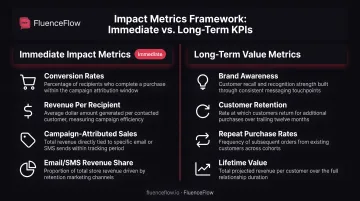
Emotional campaigns drive stronger long-term brand recall and loyalty than pure promotions. They still need clear calls-to-action that move customers from inspiration to purchase.
Best Holiday Marketing Campaigns We Love
These campaigns span decades of consistent storytelling and a few counter-cultural bets. Each one leaves a lesson DTC brands can adapt, whatever their budget or catalog size.
Coca-Cola's "Holidays Are Coming" Campaign
Coca-Cola's iconic truck tour and "Holidays Are Coming" messaging has become synonymous with the start of the holiday season in many markets. The campaign originated with the 1995 television advert and has since created cultural anticipation that extends far beyond advertising.
What makes it work:
- Same visuals, music, and messaging repeated yearly create instant recognition
- Ties the brand to holiday joy, togetherness, and the feeling that the season has started
- Spans TV, outdoor, truck tours, digital, and charity partners so customers meet it everywhere
Takeaway: Consistency compounds. An annual tradition (a signature email series, limited-edition packaging, or a recurring campaign hashtag) builds anticipation year over year until customers look forward to it as part of their holiday routine.
John Lewis Christmas Ad (Annual Campaign)
UK retailer John Lewis creates an annual Christmas ad that becomes a cultural event, generating millions of views and widespread media coverage. The 2024 campaign, "The Gifting Hour," scored 4.6 out of 5.9 for predicted long-term brand growth, John Lewis' highest effectiveness score in over a decade.
The storytelling approach:
- Emotional plots built around relationships, giving, and unexpected connection
- Memorable characters (human or animated) people remember and talk about
- Products woven into the story so emotion and commerce stay linked
Over the campaign's decade-long run, economic modeling estimated £1.2B incremental sales and £411M net profit, with profit ROI reaching up to £10 per £1 invested.
Takeaway: One standout creative asset can earn outsized organic reach when the story is worth sharing. The first two chapters of the 2024 campaign drove 17% year-over-year organic search growth and a 10-point NPS lift. Emotional storytelling works when it reinforces your brand identity instead of hiding it.
Amazon's Holiday Gift Guides and Personalization
Amazon stacks curated gift guides by category and recipient, personalized picks from browse and purchase history, and targeted emails that shorten the path to a decision. The 2024 "Toys We Love" list even sorted ideas by budget, including products under $10.
Why it works:
- Cuts decision paralysis with clear paths from inspiration to purchase
- Surfaces products shoppers are likely to buy based on their own data
- Scales curation across a huge catalog without losing a personal feel
Strong personalization can lift revenue by up to 15% and marketing ROI by up to 30%.
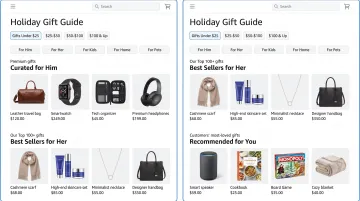
Takeaway: Gift guides and curated collections remove friction, especially for DTC brands with large catalogs. Segment holiday emails by past purchases, browse behavior, and lifecycle stage instead of blasting one generic message.
Starbucks Red Cup Campaign
Starbucks turns the annual launch of holiday cups into a social media event. Customers eagerly share photos of their red cups, generating massive organic reach. The 2025 holiday launch became Starbucks' biggest North American sales day ever, with traffic spiking nearly 38% compared to typical days.
Starbucks' holiday-cup tradition dates to 1997, establishing decades of consistency that customers anticipate each year.
The strategy:
- A collectible, photo-ready moment customers want to join and share
- Limited-time seasonal products that create urgency
- Customers acting as ambassadors because the experience is worth posting
Takeaway: Distinctive holiday packaging, unboxing moments, or limited editions can turn buyers into promoters. Scarcity drives action; social-ready details earn free reach. Ask what part of your brand someone would actually want to photograph.
Nordstrom's Integrated Holiday Discovery
Nordstrom's "Wonder All the Way" program demonstrates coordinated holiday execution across online and in-store gifting, app enhancements, and gift-discovery tools. The campaign focuses on simplifying the shopping journey through curated recommendations and seamless channel integration.
The channel strategy:
- Coordinated touchpoints across email, app, website, and stores
- Gift-discovery tools that help shoppers find relevant products fast
- One holiday message system so themes stay consistent everywhere
Takeaway: Align email, SMS, on-site personalization, and ads around the same holiday story. Fragmented campaigns confuse shoppers; integrated ones build momentum.
REI's #OptOutside Campaign
REI made the counter-cultural decision to close stores on Black Friday and encourage customers to spend time outdoors instead. Launched in 2015, the #OptOutside campaign attracted more than 1.4M participants and 170 organizations in its first year, generating 6.7B media impressions and 1.2B social impressions.
Why the contrarian bet worked:
- Real alignment with brand values: outdoor time and conservation before sales
- Clear contrast with every other retailer's Black Friday noise
- A movement people wanted to join, not another discount to ignore
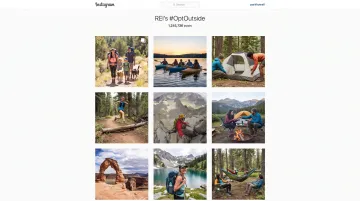
Takeaway: The campaigns people remember often zig when everyone else zags, as long as the stance matches a real brand mission. Most DTC brands won't shut down on peak days, but a distinctive point of view still cuts through holiday clutter better than another generic promo.
Key Lessons from Successful Holiday Campaigns
Emotional Storytelling Outperforms Pure Promotion
Campaigns that connect with universal holiday emotions (nostalgia, joy, generosity, family, togetherness) outperform purely promotional messaging in both immediate conversion and long-term brand recall.
System1's 2024 Christmas ad research found that the leading retail result scored 5.4 stars against a 2.7-star retail average.
Emotional campaigns don't replace commercial objectives. They enhance them. John Lewis' storytelling approach generated significant profit ROI because the emotion reinforced the brand and products instead of hiding them.
Consistency and Tradition Build Anticipation
Brands that establish annual holiday rituals (signature campaigns, limited-edition products, recurring themes, or charitable components) build anticipation over time. Coca-Cola's truck tour dates to 1995, Starbucks' holiday cups to 1997. Decades of consistency turned these into cultural moments customers look forward to each year.
For DTC brands, this doesn't require massive budgets. A signature email series, recognizable holiday packaging, an annual charitable partnership, or a recurring social hashtag can become your tradition. The key is repetition with thoughtful evolution: keep core elements recognizable while refreshing execution each year.
Multi-Channel Integration Amplifies Impact
The most successful campaigns coordinate messaging across email, SMS, social media, website personalization, and paid ads. Mobile devices generated 54.5% of 2024 holiday online sales and 57% of Cyber Monday sales, making mobile optimization and cross-channel consistency critical.
Channel-specific best practices:
- Email: Abandoned-cart flows generated $3.65 per recipient versus $0.11 for average campaigns in Klaviyo's 2024 data. Prioritize triggered flows alongside broadcast campaigns.
- SMS: Brands that added SMS recorded 20% year-over-year e-commerce revenue growth (observational, not causal). Test SMS as a complement to email.
- Paid search: Drove 29.7% of 2024 holiday revenue. Use it for high-intent capture.
- Social: Drove about 5% of revenue. Use it for awareness and assisted discovery.
You don't need every channel. Build cohesive journeys where each touchpoint reinforces the others.
Personalization and Segmentation Increase Engagement
Using customer data to tailor holiday campaigns lifts engagement and conversion versus generic blasts. Personalization tactics include:
- Gift recommendations based on past purchases and browsing behavior
- VIP early access for high-value customers and loyal repeat buyers
- Segmented offers by lifecycle stage, purchase frequency, or engagement level
- Year-in-review campaigns that show customers their own data (purchases, favorites, milestones)
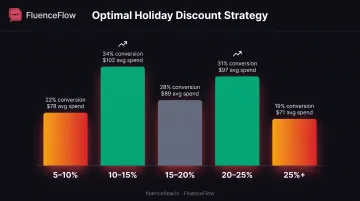
Klaviyo's 2024 benchmark data showed that 10%–15% and 20%–25% discount bands produced the highest conversion and spending during Black Friday/Cyber Monday, beating deeper cuts. Targeted, moderate offers paired with value framing often outperform blanket deep discounts.
How to Apply These Ideas to Your Holiday Marketing
Start with Your Brand's Core Values and Customer Data
Identify what your brand stands for and what your customers actually care about. Use surveys, past purchase data, engagement metrics, and customer feedback to understand their holiday pain points and motivations. Build campaigns around the intersection of your brand identity and customer needs rather than generic holiday themes.
For example, if your brand emphasizes sustainability, create a holiday campaign focused on thoughtful gifting, reusable packaging, or charitable giving. If you serve time-starved professionals, emphasize convenience, curated gift guides, and fast shipping.
Create One Signature Element That Can Become an Annual Tradition
Choose one repeatable element customers can anticipate and recognize each year:
- Signature email series with a consistent theme and design
- Limited-edition holiday packaging or product variants
- Social hashtag campaign that drives user-generated content
- Charitable tie-in where a percentage of sales supports a cause
- Exclusive early-access offer for loyal customers
Start small and refine annually. The goal is recognition and anticipation, not perfection in year one.
Plan Your Campaign Calendar with Key Touchpoints Mapped Across Channels
Identify critical dates and map messages across channels:
Critical dates to plan around:
- Early November (or earlier): When customers start browsing for gift ideas (45% planned to shop before November in 2024)
- Black Friday/Cyber Monday week: $41.1B in online sales across Cyber Week 2024, up 8.2%
- Last shipping deadlines: USPS 2024 guides: Dec. 18 Ground Advantage, Dec. 19 Priority Mail, Dec. 21 Priority Mail Express (set storefront cutoffs earlier to cover fulfillment time)
- Post-holiday: Clearance, thank-you campaigns, and retention flows to convert holiday shoppers into repeat customers
Message sequence by stage:
- Pre-season (August-September): List growth, preference collection, gift-guide previews
- Early season (October-early November): Gift inspiration, early-bird offers, curated collections
- Peak season (mid-November-mid-December): Main promotions, countdown campaigns, urgency messaging, shipping-deadline reminders
- Post-season (late December-January): Thank-you messages, year-in-review campaigns, retention flows, clearance offers
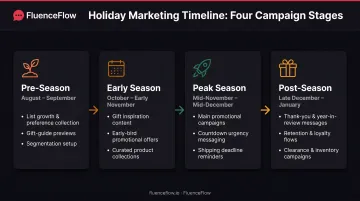
Coordinate email, SMS, social, and website touchpoints so the offer and story stay consistent everywhere customers look. Segment audiences and respect send-frequency preferences so peak-season volume does not turn into fatigue.
Conclusion
The best holiday marketing campaigns balance creativity with strategy and brand authenticity with real customer needs. They create memorable experiences that turn seasonal shoppers into long-term customers, not one-off promo buyers.
Sophisticated holiday email and SMS still depends on personalization, segmentation, and multi-channel timing working together. That level of execution needs the right partner and tech stack behind it.
FluenceFlow helps DTC brands turn holiday traffic into repeat revenue through custom email and SMS retention systems. Results our clients see include:
- 41% of total store revenue from email and SMS on average
- 61% lift in email-attributed revenue for one brand
- 25% above a prior Black Friday/Cyber Monday sales record
We work month-to-month with custom performance guarantees, so you only pay when we deliver measurable results.
Frequently Asked Questions
What is the best holiday marketing campaign?
The best campaign fits your brand, audience, and goals. Winners share a few traits: emotional resonance, authentic brand fit, consistent messaging across email/SMS/social/web, and clear CTAs that move shoppers from inspiration to purchase.
What are some creative ideas for holiday marketing campaigns?
Strong options include personalized gift guides from purchase or browse history, UGC campaigns with branded hashtags, limited-edition products or packaging, charity tie-ins, and year-in-review emails. Counter-cultural angles also work when every competitor sounds the same.
What makes a holiday marketing campaign successful?
Plan 2–3 months ahead, know your audience from data, and lead with emotion, not only discounts. Keep messaging consistent across channels, optimize for mobile (54.5% of 2024 holiday sales), and measure both conversions and retention.
When should I start planning my holiday marketing campaign?
Start in August–September for November–December launches so you have time for creative, assets, tech setup, segmentation, and testing. With 45% of shoppers browsing or buying before November in 2024, early prep captures demand instead of scrambling at peak.
How can small businesses compete with big brand holiday campaigns?
Compete on authenticity, personalization, and community, not ad spend. Put energy into email and SMS, where you own the relationship, and build distinctive gift guides, founder stories, limited editions, or values-led campaigns instead of trying to outspend big brands.
What channels work best for holiday marketing campaigns?
Email and SMS deliver the highest ROI for e-commerce, especially when personalized. Abandoned-cart flows generated $3.65 per recipient versus $0.11 for average campaigns in 2024. The strongest results come from integrating channels into one cohesive journey, not isolated tactics.