This guide covers proven lead magnet examples that work for e-commerce brands, what makes them convert, and how to implement them for your Shopify store. You'll learn which formats match different business models, how to avoid common mistakes, and what performance benchmarks to expect.
Key Takeaways
- Lead magnets trade free value, such as discounts, guides, and quizzes, for emails; the list that powers DTC retention revenue
- Effective magnets solve specific problems and deliver immediate value: discount popups convert at 2.4%, versus 1.7% without incentives
- Different formats work for different stages: discounts for first-time visitors, quizzes for personalization, guides for mid-funnel education
- Implementation determines results: mobile optimization, 6-10 second delays, and URL targeting each improve conversion rates
- Email popups average 2.1% conversion across 1.24 billion displays, with gamified wheels reaching 3.5%
What Is a Lead Magnet?
A lead magnet is a free incentive offered in exchange for contact information, primarily an email address. It pulls website visitors into your marketing funnel so you can keep the conversation going after they leave.
For e-commerce brands, lead magnets capture shoppers who aren't ready to buy on the first visit. You nurture them through email and SMS instead of losing them forever.
Only 1.4% of online shoppers purchase during their first session, making email capture critical for DTC brands. A lead magnet bridges the gap between that first visit and an eventual purchase by giving visitors a reason to share their information.
Not all lead magnets work equally well. The strongest ones attract qualified buyers, not freebie-seekers. They tend to be:
- Targeted to your ideal customer
- Valuable enough that shoppers will trade an email for them
- Relevant to the products you sell
A skincare brand offering a "Complete Routine Guide" will build a higher-quality list than one offering a generic $5 discount to everyone.
What Makes a Lead Magnet Convert
Immediate Value
High-converting lead magnets deliver something useful right away. A discount code visitors can use now or a quiz result with product recommendations both deliver instant value. Delayed offers ("Join our newsletter for tips") create doubt about whether the trade is worthwhile.
Relevance to Your Product
The best lead magnets naturally lead to your products. A beauty brand's skincare routine guide or an apparel brand's sizing chart solves a problem your products already address. When the magnet aligns with what you sell, subscribers are pre-qualified and more likely to convert.
Low Friction
Asking for only an email address boosts conversion rates. Multi-step popups that request name, phone, birthday, and preferences create unnecessary barriers.
Analysis of 1.24 billion popup displays found multi-step forms at 2.3% versus 2.0% for single-step forms. That study measured form structure, not field count; fewer fields still win.
Strategic Timing and Placement
When and where you show your lead magnet matters as much as the offer itself:
- Delayed popups (6-10 seconds) convert at 2.4%, versus 1.9% for immediate popups
- URL-targeted popups reach 2.4%, versus 2.0% for non-targeted displays
- Mobile-optimized forms achieve 2.2%, while desktop-only forms hit just 1.4%
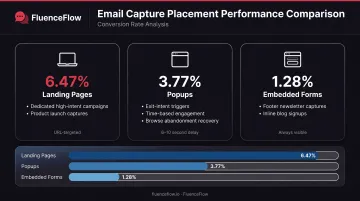
- Landing pages average 6.47% conversion, popups 3.77%, and embedded forms 1.28%
Different placements serve different purposes. Exit-intent popups catch visitors before they leave, welcome mats on landing pages capture high-intent traffic, and embedded forms on blog posts appeal to readers seeking deeper information.
Lead Magnet Examples for E-commerce Brands
These examples are organized by what converts best for different e-commerce business models and customer journeys. Match the format to your product type, average order value, and buying cycle for best results.
First-Order Discount Code
Percentage or dollar-off discounts work best for first-time visitors who need an incentive to try your brand. This format is most effective for lower-priced items or new customer acquisition campaigns.
Discount popups convert at 2.4%, compared with 1.7% without a discount, a 41% relative lift. Discount size matters less than you'd think: analysis of 200+ e-commerce popups found no large difference among 10%, 15%, and 20% offers. Make the offer clear and time-bound rather than maximizing the discount itself.
Best for: Consumable products, apparel, beauty, and other categories with shorter consideration cycles and moderate price points.
Caution: High-AOV luxury brands may cheapen their positioning with aggressive discounts. For products over $400, consider non-discount alternatives.
Interactive Product Quiz
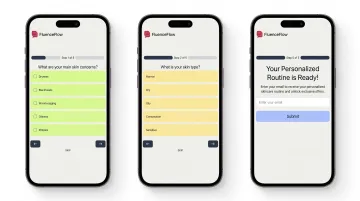
Quizzes like style finders, product matchers, and skincare diagnostics capture emails while providing valuable zero-party data about customer preferences. They work well for brands with large catalogs or personalized product lines.
Jones Road Beauty's quiz generated more than 800,000 subscribers and built over 80% of its marketing list. Octane AI reports average quiz opt-in rates of 42% (methodology not disclosed). The real advantage is qualification: quiz takers want recommendations, so they tend to become highly engaged subscribers.
Best for: Beauty, apparel, supplements, home goods, and any category where personalization drives purchase decisions.
Implementation tip: Keep quizzes to 5-7 questions maximum. Longer quizzes increase abandonment.
Free Shipping Threshold
Offering free shipping at a specific order value captures emails while incentivizing larger purchases. This works when you frame it as exclusive access: "Get notified when you qualify for free shipping" or "Join our VIP list for free shipping on orders over $75."
Hard benchmarks for free-shipping lead magnets are scarce, but the principle holds: free shipping remains one of the top reasons shoppers complete purchases.
Best for: Mid-to-high AOV brands where shipping cost creates purchase hesitation.
Note: This works best when the threshold is slightly above your average order value, encouraging basket growth.
Exclusive Early Access
Early access to sales, new product launches, or limited collections creates urgency and attracts your most engaged customers. This format works best for established brands with loyal audiences who already understand your value proposition.
Unlike discounts, early access preserves margins while rewarding interest. It's particularly effective for limited-edition drops, seasonal collections, and brands with cult followings.
Best for: Established DTC brands with proven product-market fit and repeat customers.
Timing matters: Promote early access 2-3 weeks before launches to build anticipation.
Educational Buying Guide
Comprehensive guides establish expertise while capturing emails. Examples include "Complete Guide to Choosing Running Shoes" for athletic wear, "Coffee Brewing Methods Explained" for coffee brands, or "Mattress Buying Guide" for sleep products.
Educational content attracts more qualified leads than discount-only offers because it requires genuine interest in the category. Subscribers who download buying guides have higher lifetime value and lower unsubscribe rates.
Best for: Complex products, high-consideration purchases, and categories where buyers research extensively before purchasing.
Format tip: Deliver guides as PDF downloads or email series to maximize perceived value.
Video Tutorial or Masterclass
How-to tutorials, styling sessions, and product demos give shoppers something substantial in exchange for an email. Video often feels higher-value than a text guide, especially for visual learners.
E-commerce-specific completion stats are thin, but video consistently lifts engagement across marketing channels.
Best for: Beauty (makeup tutorials), fitness (workout classes), cooking (recipe demos), and DIY/craft brands.
Length matters: Keep videos under 10 minutes for email-gated content. Longer masterclasses work better as multi-part email series.
Size, Fit Guide, or Consultation
Personalized sizing help solves a major pain point for apparel and footwear brands while capturing emails. Virtual fit consultations, detailed size charts, or body-type guides reduce returns while building your list.
This format tackles the top objection for online apparel purchases (fit uncertainty), which makes it highly valuable to your audience.
Best for: Apparel, footwear, accessories, and any product where sizing creates purchase hesitation.
Bonus benefit: Reduces return rates by setting accurate expectations upfront.
Exclusive Content or Insider Community
Access to a private Facebook group, members-only content section, or VIP community works for brands with strong identity or lifestyle components. Think fitness brands, outdoor recreation, parenting products, or hobby-focused stores.
Published conversion metrics for community magnets are limited. The format still works when your brand represents a lifestyle, not just a product.
Best for: Brands with passionate audiences and strong brand identities that extend beyond products.
Sustainability note: Community magnets require ongoing moderation and content creation to deliver value.
Free Sample or Trial
Offering a free product sample or trial works best for consumables, subscription boxes, and high-consideration items where experiencing the product drives conversion.
Run the economics first: customer acquisition cost must justify giving away product. Coffee brands, skincare lines, and food products often make this work because samples convert into subscriptions or repeat purchases.
Best for: Consumable products with strong repeat-purchase rates and subscription models.
Implementation: Charge shipping ($4.95) to cover costs and filter for serious prospects.
Giveaway or Contest Entry
Sweepstakes and giveaways can rapidly build lists, but quality is a concern. Entrants may be prize-seekers, not qualified buyers.
Average conversion rates for e-commerce contests vary widely. Shopify recommends brand-aligned prizes (limited-edition products or collections, not cash or iPads) so you attract relevant subscribers.
Best for: Rapid list growth campaigns and brand awareness initiatives.
Quality tip: Require additional actions (follow on Instagram, refer a friend) to earn extra entries, increasing engagement.
Personalized Recommendation
AI-powered or algorithm-based product recommendations based on quiz responses or browsing behavior provide unique value. This works when you have a large catalog or complex product line, because a tailored shortlist cuts through choice overload and gives shoppers a reason to share their email.
Best for: Large catalogs, technical products, and categories where choice overload creates decision paralysis.
Technical requirement: Requires integration with recommendation engine or quiz platform.
Birthday or Anniversary Club
Birthday clubs with special offers create ongoing engagement touchpoints while capturing valuable customer data. The offer itself (birthday discount, free gift) becomes an annual retention driver.
Redemption and LTV benchmarks are hard to pin down, but the format gives you a natural reason to reach out each year and deepens the customer relationship.
Best for: All DTC brands, especially those with strong emotional connections or gift-giving occasions.
Data benefit: Birth month provides segmentation opportunities for seasonal campaigns.
How to Create a Lead Magnet That Converts
Choose the Right Format for Your Brand
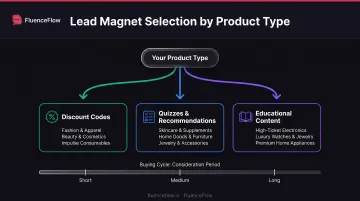
Match your lead magnet type to your product and buying cycle:
- Discounts for impulse buys: Low-consideration products under $50
- Education for complex products: High-ticket items requiring research
- Quizzes for personalization: Large catalogs where recommendations add value
- Early access for loyal customers: Established brands with repeat buyers
High-AOV brands (over $400) should avoid discount-led acquisition when possible. Buyers research across 8-15 touchpoints, so education and confidence-building beat price cuts.
Low-AOV consumables benefit from aggressive upfront conversion. Profitability comes from the second and third purchases, not the first order alone.
Design with Mobile in Mind
Smartphones generate nearly 80% of worldwide retail-site visits, making mobile optimization non-negotiable. Popups and forms must be mobile-optimized, with large tap targets, minimal form fields, and fast load times.
Mobile-only and cross-device popups average 2.2% conversion, versus 1.4% for desktop-only displays. Test every form on an actual mobile device, not just browser emulators, before launching.
Craft Compelling Copy and Design
Your popup needs three elements:
- Clear headline stating the offer: "Get 15% Off Your First Order" beats "Join Our Community"
- Benefit-focused description: "Plus early access to new arrivals" adds value
- Strong CTA: "Claim Your Discount" converts better than "Submit"
Match the popup design to your brand aesthetic. Clean layout, on-brand colors, and a single focused offer raise perceived value and trust, both of which lift signup rates.
Set Up the Technical Implementation
Implementation steps:
- Create the form in your email platform (Klaviyo, Omnisend, etc.)
- Set display rules: timing (6-10 second delay), pages (homepage, product pages), exit-intent triggers
- Connect the form to your website via embed code or platform integration
- Create the thank-you confirmation flow with discount code delivery
- Integrate with your welcome email series
Mobile-first design, URL targeting, and delayed display all improve conversion. Top-left popup placement achieves 2.1%, while top-right drops to 1.3%; small details matter.
Test and Optimize
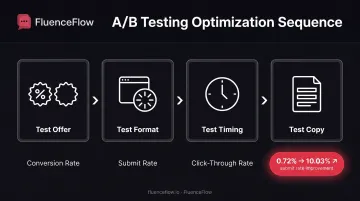
A/B test systematically:
- Offer first: Discount versus non-discount, percentage versus dollar amount
- Format second: Standard popup versus wheel gamification (3.5% versus 2.0%)
- Timing third: Immediate versus 6-10 second delay
- Copy fourth: Headlines, CTAs, and benefit statements
The gap between average and high-performing popups is large. In one FluenceFlow case, submit rate rose from 0.72% to 10.03%, and attributed revenue climbed from $17,000 to $141,000.
How to Promote Your Lead Magnet
Onsite Placement Strategies
Where you place signup forms determines visibility and conversion:
- Landing pages: 6.47% average conversion, best for paid traffic
- Popups: 3.77% average, homepage and product pages
- Flyouts: 3.24% average, non-modal sidebar displays
- Embedded forms: 1.28% average, blog posts and content pages
Top-left popup placement achieves 2.1%, while center placement drops to 1.8%. Test placement systematically, measuring not just conversion rate but absolute email volume and downstream purchase rates.
Paid Traffic Channels
Drive traffic to dedicated landing pages via Facebook/Instagram ads, Google Ads, or influencer partnerships when you need to scale list growth quickly. Dedicated landing pages outperform onsite popups for paid campaigns, so send ad traffic there, not to your homepage.
Budget $10-15 per acquired email for cold traffic, less for retargeting. Optimize for cost per lead, not just click-through rate.
Owned Channel Touchpoints
Promote lead magnets through:
- Social posts, Stories link stickers, and link-in-bio CTAs
- Post-purchase emails suggesting referrals or additional signups
- Packaging inserts with QR codes directing to exclusive offers
FluenceFlow automates the popup, email, and SMS pieces of this mix so lead magnets stay in front of shoppers without manual campaign work.
Frequently Asked Questions
Do lead magnets still work?
Yes, lead magnets remain one of the most effective list-building tactics for e-commerce. Analysis of 1.24 billion popup displays captured 26.4 million emails at a 2.1% average conversion rate, with discount offers reaching 2.4%. Websites using targeted lead magnets consistently outperform generic newsletter signups.
What are examples of lead magnets?
Common e-commerce types include discount codes (10–20% off), product quizzes, buying guides, free samples, early access, and giveaway entries. Match the format to your business model and where buyers are in the journey.
What is another name for a lead magnet?
Lead magnets are also called "opt-in offers," "content upgrades," "freebies," or "lead captures." All describe the same idea: trade value (a discount, guide, or exclusive access) for contact information.
What's the best lead magnet for e-commerce brands?
The "best" magnet depends on your business model. Discount codes work well for low-consideration purchases under $50, quizzes excel for personalized products like beauty or apparel, and educational content attracts higher-quality leads for premium or complex products over $400. Match format to your buying cycle and margins.
How do I create a lead magnet for my online store?
Choose a format that matches your customer needs (discount, quiz, guide), create the offer using your email platform's form builder (Klaviyo, Omnisend), and place it strategically on your website with clear value-proposition copy. Set a 6-10 second display delay, optimize for mobile, and integrate with your welcome flow for immediate nurture.
Do lead magnets work better than newsletter signups?
Yes. Lead magnets with a clear offer convert at 2.4% (discounts) versus 1.7% without incentives, a 41% relative lift. Generic "Join our newsletter" forms skip the immediate benefit; targeted magnets answer "What's in it for me?" up front.