Understanding your ecommerce funnel changes the game. Instead of guessing which marketing tactics work, you'll know exactly where prospects drop off and how to fix it. This article breaks down the five stages of an ecommerce funnel, shows real examples at each stage, explains which metrics matter most, and provides actionable optimization strategies to systematically increase revenue at every step of the customer journey.
Key Takeaways
- Ecommerce funnels map five stages from first touch to repeat buy: Awareness, Interest, Consideration, Conversion, Retention
- Cold traffic needs different content than ready-to-buy shoppers; mismatched messaging wastes ad spend
- Top stores hit 5–10% conversion rates with funnel optimization, vs. a 2–3% baseline
- Retention drives 30–40% of revenue for optimized stores and often beats acquisition ROI
What Is an Ecommerce Funnel?
An ecommerce funnel maps the customer journey from initial awareness through consideration to purchase and repeat purchase. It tracks every touchpoint where a prospect interacts with your brand, so you can see where they enter, drop off, and convert.
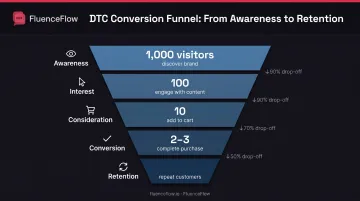
The "funnel" shape reflects how many people enter at the top when they first discover your brand, but fewer progress through each stage. Out of 1,000 visitors who see your Instagram ad, maybe 100 click through to your site, 10 add items to their cart, and only 2-3 complete checkout.
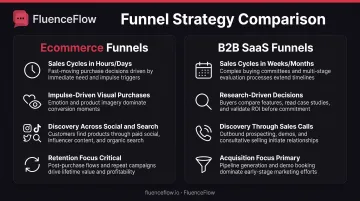
Ecommerce funnels differ from B2B SaaS or service-business funnels in several ways:
- Sales cycles run hours or days, not weeks or months
- Purchases are often impulse-driven and visual, especially at lower price points
- Product discovery happens across social, search, and influencer content, not sales calls
- Retention and repeat purchases matter more, because acquiring a new customer costs far more than keeping one
The 5 Stages of an Ecommerce Funnel
While some models use three or four stages, the most comprehensive ecommerce funnel includes five distinct stages. Each requires different marketing tactics, content strategies, and measurement approaches.
Stage 1: Awareness (Top of Funnel)
Awareness is where potential customers first discover your brand. They often don't yet know they have a specific need or that your solution exists. Focus on brand recall, building trust, and driving traffic, not on direct conversion.
Primary channels for awareness:
- Social media marketing (organic posts, influencer partnerships)
- Paid social ads (Instagram, Facebook, TikTok)
- Search engine ads for broad keywords
- SEO content targeting informational queries
- PR and media coverage
Real examples:
- A sustainable fashion brand runs Instagram Reels showing "day in the life" content featuring their products
- A beauty brand partners with micro-influencers for unboxing videos
- A home goods store ranks for "how to style a small apartment" and links to product category pages
At this stage, measure reach, impressions, and new visitor percentage rather than conversion rate.
Stage 2: Interest (Upper-Middle of Funnel)
Interest stage prospects have identified a need and are actively researching solutions, though they may not yet know which specific products or brands they prefer. Capturing email addresses becomes critical here.
Key tactics:
- SEO content targeting comparison keywords ("best organic dog food brands")
- Email opt-in incentives (10-20% off first purchase, free shipping)
- Retargeting ads to website visitors
- Educational blog content
- Product category pages with filtering options
Real examples:
- A supplement brand offers a quiz to find the right vitamins, capturing emails in exchange for personalized results
- A furniture company shows room inspiration galleries that visitors can save by creating an account
- An electronics retailer publishes buying guides and captures emails through gated content
According to Klaviyo's analysis, effective popup forms should aim for a 3% or higher submit rate. The specific incentive matters. Test percentage discounts versus dollar amounts versus free shipping to find what resonates with your audience.
Stage 3: Consideration (Lower-Middle of Funnel)
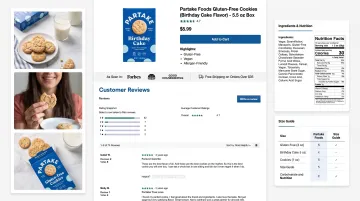
Consideration stage prospects have narrowed their options to a few brands and are comparing features, prices, reviews, and value propositions. This is where product pages and social proof matter most.
Content that converts at this stage:
- Detailed product pages with high-quality images and videos
- Customer reviews and ratings
- Comparison charts
- Size guides and detailed specifications
- FAQ sections
- Live chat support
Real examples:
- A mattress company provides a comparison chart of their models with firmness ratings, materials, and pricing
- An apparel brand displays customer photos and fit reviews to show how items look on different body types
- A skincare brand explains ingredient benefits with clinical study citations
Research from PowerReviews shows that 93% of consumers say ratings and reviews affect whether they purchase, while 45% won't buy a product with no reviews at all.
User-generated imagery matters too: 77% of shoppers trust customer photos, and 60% use them to learn about unfamiliar products.
Retargeting ads with specific product reminders and abandoned browse emails work well here to keep your brand top-of-mind as prospects compare options.
Stage 4: Conversion (Bottom of Funnel)
Conversion stage customers are ready to purchase but may have last-minute objections around price, shipping, return policy, or trust. Average cart abandonment sits at 70%, with extra costs being the top reason 40% of shoppers abandon.
Optimization focuses on:
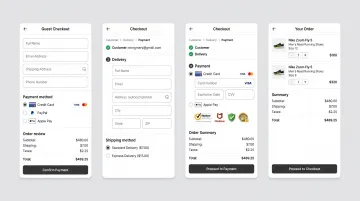
- Streamlined checkout process with minimal form fields
- Multiple payment options (Shop Pay, PayPal, Apple Pay)
- Clear shipping costs and delivery times shown early
- Trust signals (security badges, return policy, guarantees)
- Abandoned cart recovery emails
Real examples:
- A checkout page with a sticky "Complete Purchase" button that follows users as they scroll
- A three-email cart abandonment series: first at 2-4 hours (reminder), second at 24 hours (discount), third at 48 hours (final chance or feedback request)
- Exit-intent popups offering free shipping or a small discount code
According to Klaviyo's analysis of 143,000+ flows, abandoned cart emails achieve a 3.33% placed-order rate on average, with top performers reaching 7.69%. The timing and sequence matter. Test different intervals and incentives to find what works for your audience.
Baymard Institute research suggests an average large ecommerce site can gain up to 35% in conversion rate through checkout design improvements alone. Focus on reducing friction: offer guest checkout, display trust badges, and be transparent about all costs before the final step.
Stage 5: Retention (Post-Purchase)
Retention is the most overlooked but often most profitable stage. New customers cost more to win than existing ones cost to keep, and repeat buyers tend to spend more per order.
Retention tactics:
- Post-purchase email sequences (thank you, delivery updates, review requests)
- Replenishment reminders for consumables
- Loyalty programs with points or tiered benefits
- Exclusive offers for repeat customers
- SMS campaigns for new product launches
- Win-back campaigns for lapsed buyers
Real examples:
- A coffee brand sends reorder reminders three weeks after purchase, timed to when the bag is likely running low
- A beauty brand offers VIP customers early access to new products
- A pet supply store runs a points-based loyalty program where members earn rewards for purchases and referrals
According to Klaviyo's research, repeat customers are 9x as likely to convert as first-time shoppers and spend 3x as much per order. For many successful DTC brands, the average store earns 41% of revenue from just 8% of customers: those who've bought multiple times.
Automated lifecycle flows drive nearly 41% of email revenue while accounting for only 5.3% of sends, with 13x higher placed-order rates than one-off campaigns. This is where FluenceFlow helps DTC brands build email and SMS systems around unit economics rather than generic templates. Those retention systems often drive 30-40% of total store revenue.
Key Metrics to Track at Each Funnel Stage
Measuring funnel performance requires tracking different metrics at each stage, not just overall conversion rate.
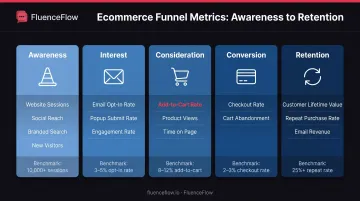
Awareness Stage Metrics:
- Total website sessions
- Social media reach and impressions
- Branded search volume
- New visitor percentage
Top-of-funnel growth sets the ceiling for everything below it. If conversion improves but sessions stay flat, revenue stalls.
Interest Stage Metrics:
- Email opt-in conversion rate
- Popup submit rate
- Content engagement rate (blog, quiz, or lead magnet)
Klaviyo recommends targeting a 3% or higher popup submit rate. Every additional opt-in feeds welcome and nurture flows, so list growth rate directly shapes downstream revenue.
Consideration Stage Metrics:
- Add-to-cart rate
- Product page engagement (time on page, scroll depth)
- Product views per session
Shopify reports a 7.9% global add-to-cart rate. Stronger product pages, clear offers, proof, and reviews, move this number faster than traffic alone.
Conversion Stage Metrics:
- Checkout conversion rate
- Cart abandonment rate
With 70% of carts abandoned on average, checkout friction fixes and abandoned-cart flows are two of the fastest revenue levers in the funnel.
Retention Stage Metrics:
- Customer Lifetime Value (CLV)
- Repeat purchase rate
- Email/SMS revenue contribution
Calculate CLV as average order value × purchase frequency × average customer lifespan. Retention gains usually outperform acquisition-only spend on profit. According to Klaviyo, the average store earns 41% of revenue from just 8% of customers, mostly through email and SMS lifecycle programs.
Cross-Funnel Metric:
- Average Order Value (AOV): Total revenue ÷ total orders
AOV multiplies results at every stage. Bundles, post-purchase upsells, and free-shipping thresholds are the most reliable ways to lift it.
How to Optimize Your Ecommerce Funnel
Funnel optimization is continuous: test, measure, and iterate from data, not assumptions.
Improve Awareness by Targeting the Right Audience
Analyze which traffic sources and campaigns bring visitors with the highest conversion rates and lowest customer acquisition cost (CAC). Double down on those channels while cutting underperformers. If Instagram drives more qualified traffic than Facebook, shift budget accordingly.
Capture More Emails with Compelling Offers
A/B test different opt-in incentives (percentage discount, dollar amount, or free shipping) along with popup timing and copy. Balance conversion rate with user experience; don't show a popup within the first five seconds or on every page load.
Optimize Product Pages for Consideration
Add customer photos, video demonstrations, detailed size and fit information, and live chat support. Prioritize mobile: mobile accounts for 78% of ecommerce traffic and 70% of orders. Test different image layouts, description formats, and CTA button placements.
Reduce Cart Abandonment Through Checkout Optimization
- Reduce form fields to only essential information
- Offer guest checkout prominently
- Display trust badges and security signals
- Be transparent about shipping costs early in the process
- Provide multiple payment options (credit card, PayPal, Shop Pay, Apple Pay)
- Implement a three-email abandoned cart series
Baymard's research shows 18% of shoppers abandon because they don't want to create an account, yet 62% of sites fail to make guest checkout most prominent.
Build Retention Through Strategic Email and SMS Marketing
Post-purchase sequences, segmented campaigns based on purchase history, and personalized product recommendations turn one-time buyers into repeat customers. Time replenishment reminders to actual product usage, not just generic 30-day intervals.
Unit economics should drive the system you build. High-AOV brands with long purchase cycles need different flows than low-AOV consumable brands that reorder often.
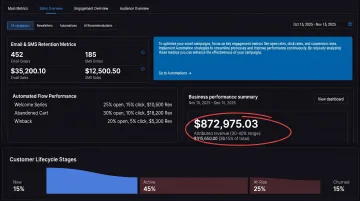
FluenceFlow builds email and SMS retention around those economics rather than generic templates. Clients average 41% of total store revenue from email and SMS, turning traffic you've already paid to acquire into repeat revenue.
Common Ecommerce Funnel Mistakes
Focusing Only on Acquisition While Neglecting Retention
Many brands pour budget into top-of-funnel ads but fail to maximize the value of customers they've already acquired. Research shows the average store earns 41% of revenue from just 8% of customers, those who buy multiple times.
Repeat customers are 9x more likely to convert and spend 3x as much per order. Leave retention on autopilot and you leave repeat revenue unclaimed.
Using the Same Messaging at Every Funnel Stage
Trying to close a cold audience with conversion-focused ads, or serving engaged prospects basic awareness content, wastes spend and misses the moment. Match the message to the stage:
- First-time visitors need education and trust-building
- Cart abandoners need urgency and objection handling
- Repeat customers need exclusive access or replenishment reminders
Not Tracking Micro-Conversions and Drop-Off Points
Only measuring final conversion rate hides where the funnel actually breaks. If your add-to-cart rate is 7.9% but checkout conversion is 30%, the problem isn't your product pages. It's checkout.
Track stage-by-stage metrics to spot specific bottlenecks and prioritize the fixes with the biggest impact.
Frequently Asked Questions
What are the 5 stages of an ecommerce funnel?
The five stages are:
- Awareness: prospect discovers your brand
- Interest: prospect researches solutions
- Consideration: prospect compares options
- Conversion: prospect completes purchase
- Retention: customer buys again
What is an e-commerce conversion funnel?
An ecommerce conversion funnel maps the customer journey from first brand touch through purchase and repeat buying. It shows how prospects move toward a sale and where they drop off so you can fix each stage.
Can you give an example of an ecommerce funnel?
A typical path looks like this:
- Awareness: Sees an Instagram ad for running shoes
- Interest: Visits the site and signs up for 15% off
- Consideration: Reads reviews and compares models
- Conversion: Adds to cart and checks out
- Retention: Gets new-arrival emails and buys again three months later
Is an ecommerce funnel still relevant today?
Yes. Journeys now span more devices and channels, but the funnel still organizes strategy around where someone is in the buy path. It gives you a clear way to measure drop-off and put budget where it moves the needle.
What is an email funnel in ecommerce?
An email funnel is an automated sequence that moves subscribers from first opt-in to purchase and repeat orders. Common pieces include welcome series, abandoned cart, post-purchase, replenishment, and winback flows.
What is the 80/20 rule in eCommerce?
The 80/20 rule (Pareto Principle) says a small share of inputs drives most outcomes, often ~80% of revenue from ~20% of customers or products. Use it to double down on your highest-impact segments, SKUs, and channels instead of spreading budget evenly.