The objection is valid: generic pop-ups that block content and interrupt browsing are annoying. But modern pop-ups solve real problems for visitors. They offer genuine value, such as meaningful discounts, free shipping, or personalized product recommendations, in exchange for permission to continue the conversation. The difference between an effective pop-up and a frustrating one comes down to three factors: targeting (showing the right message), timing (at the right moment), and value (with the right offer).
This article breaks down real pop-up examples from successful e-commerce brands, analyzes exactly what makes each one work, and shows you how to implement similar strategies for your store.
Key Takeaways
- Gamified spin-to-win pop-ups convert at 3.5%, outperforming static overlays at 2.0%
- Discount offers increase conversion rates to 2.4% versus 1.7% without an incentive
- Delayed pop-ups (6-10 seconds) convert 26% better than immediate displays
- Multi-step forms capture more data while maintaining 2.3% conversion rates
- Mobile-optimized pop-ups convert at 2.2%, 57% higher than desktop-only formats at 1.4%
What Are Website Pop-Ups and Why Use Them for E-commerce?
A website pop-up is an overlay window that appears on a webpage to engage visitors with a specific message or offer. Most ask for an email address or phone number in exchange for a discount, exclusive content, or other value.
For e-commerce brands, pop-ups serve four primary business goals:
- Build email and SMS lists by capturing contact information for ongoing marketing
- Reduce cart abandonment with incentives when visitors show exit intent
- Increase average order value through complementary product recommendations and upsells
- Improve engagement by collecting preferences and zero-party data for personalization
Addressing Common Pop-Up Concerns
Many site owners worry that pop-ups hurt user experience or SEO. Google's documentation warns that intrusive interstitials can frustrate users and potentially impact search performance, but this applies specifically to overlays that obstruct core content access.
Modern best practices address those concerns with delayed triggers, easy dismissal, mobile optimization, and value-first messaging.
Pop-Up Performance Data
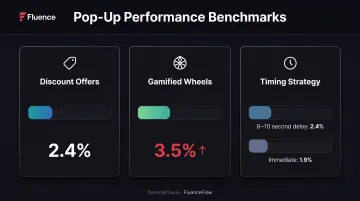
Omnisend's 2025 research analyzed 1.24 billion pop-up displays and 26.4 million signups, finding that email-capture pop-ups averaged 2.1% conversion. Performance varied dramatically based on design and targeting:
- Pop-ups offering discounts converted at 2.4% versus 1.7% without incentives
- Gamified wheel overlays reached 3.5% conversion
- Properly timed pop-ups (6-10 second delay) achieved 2.4%, outperforming immediate displays at 1.9%
The most effective pop-ups don't just capture emails. They feed subscribers directly into automated welcome flows, abandoned cart sequences, and segmentation strategies that turn one-time visitors into repeat customers.
Top Website Pop-Up Examples for E-commerce
These examples cover different pop-up types, offer strategies, and design approaches that convert well for DTC brands.
FluenceFlow - Multi-Step Email & SMS Capture
Brand: FluenceFlow is a retention marketing agency serving e-commerce brands doing $50K+ monthly revenue, specializing in Klaviyo email and SMS automation for Shopify stores.
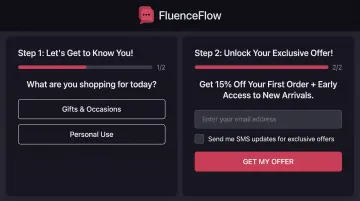
Pop-up design: FluenceFlow's custom pop-up strategy uses a two-step progressive form. The first step asks a single qualifying question (shopping occasion for premium brands, or product preference for consumables), then captures email in step two, with an optional SMS field for text updates.
Offers are tied to each brand's unit economics rather than generic discounts. Carroll's Corn offers 10% off while asking visitors to pick a preferred flavor. Sartoro, a luxury suit brand, offers $102 off paired with occasion choices like "Your Wedding," "Work / Business," or "Social / Casual."
Why it works: Breaking the ask into smaller steps cuts friction and collects zero-party data for personalized follow-up flows. One documented comparison showed a pop-up at 10.03% submit rate and $141,000 in attributed revenue versus another strategy at 0.72% and $17,000.
The multi-step format also captures SMS without overwhelming visitors. Klaviyo data shows about half of email subscribers who see a later SMS field also opt in. Because pop-ups go live in week one with welcome flow integration, new subscribers enter segmented Klaviyo sequences right away, which is how a 2-3% pop-up conversion rate can grow into 30-60% of total email revenue over time.
Nutrimuscle - Exit-Intent Cart Recovery
Brand: Nutrimuscle is a French sports nutrition brand selling supplements and performance products.
Pop-up design: Nutrimuscle's exit-intent overlay triggers when a visitor with items in their cart moves their cursor toward the browser's close button. The pop-up uses urgency messaging ("high demand" product warnings) and presents two clear options: complete the order now or save the cart for later.
Why it works: Exit-intent technology identifies the precise moment a visitor intends to leave, making the interruption contextually relevant rather than arbitrary. Wisepops' 2025 analysis of 500 stores found exit-intent pop-ups averaged 2.81% conversion, with top performers reaching 19.63%. Nutrimuscle's campaign achieved a 5.7% click-through rate while contributing to overall sales increases.
Cart abandonment rates average 73.9% across e-commerce according to eMarketer's 2024 research, meaning nearly three-quarters of shoppers who add products never complete checkout. Exit-intent overlays recover a meaningful portion of that lost revenue by presenting one final incentive at the moment of abandonment.
Faguo - Gamified Spin-to-Win
Brand: Faguo is a French sustainable footwear and apparel brand.
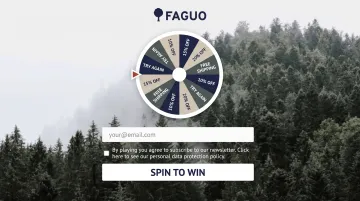
Pop-up design: Faguo's spin-to-win overlay presents visitors with an interactive prize wheel. Visitors enter their email address, spin the wheel, and instantly discover their discount or prize. The gamified element creates anticipation and engagement rather than passive form-filling.
Why it works: Omnisend's data shows wheel-based pop-ups convert at 3.5%, 75% higher than standard 2.0% static overlays. The game mechanic transforms a transactional exchange (email for discount) into an experience. Faguo reported lead generation 11x faster and cost-per-lead 4x lower after implementing the strategy, though this case was documented outside the 2022-2025 measurement window.
Gamification works particularly well for brands targeting younger demographics and impulse-purchase categories where the initial transaction matters more than extensive research.
Kosmo's Q - Micro-Commitment First Step
Brand: Kosmo's Q sells BBQ sauces, rubs, and seasonings.
Pop-up design: Rather than immediately asking for an email address, Kosmo's Q's pop-up opens with a single question: "Would you like a discount?" Only after the visitor clicks "yes" does the email field appear, along with the specific offer (10% off). The alternative button reads "NO THANKS" in clear, non-manipulative language.
Why it works: This "micro-yes" technique reduces psychological friction. By securing a small commitment first (clicking "yes" to a discount), the pop-up creates momentum toward completing the larger action (providing an email). The two-step structure also feels more conversational than a single form demanding information upfront. Klaviyo's 2025 research found multi-step email forms achieved a median 2.85% conversion versus 2.27% for single-step formats, though the difference wasn't statistically significant in their dataset.
Caden Lane - Survey-Based Segmentation
Brand: Caden Lane specializes in personalized baby and kids apparel, nursery décor, and gifts.
Pop-up design: Caden Lane's overlay offers 15% off in exchange for an email address, but adds a segmentation question: Is the visitor shopping for an expected baby, a newborn (age 0-4), or a child over 5? This single question divides subscribers into three distinct lifecycle segments.
Why it works: The survey collects data you can act on in follow-up. A subscriber shopping for an expected baby enters a pre-birth nurture sequence with registry content and nursery essentials. A subscriber with a newborn gets different product recommendations and replenishment reminders.
That segmentation lifts email relevance and conversion versus a generic welcome series. Multi-step and survey pop-ups also filter for intent: people willing to answer a question are usually more engaged than those who drop an email for a discount they never plan to use.
Wild Fork Foods - Value Clarity and Trust Signals
Brand: Wild Fork Foods is an online meat, seafood, and grocery retailer.
Pop-up design: Wild Fork's email capture pop-up leads with a clear value proposition (free shipping or a specific discount) and includes transparent language about how subscriber information will be used: product personalization, offer delivery, unsubscribe rights, and links to terms and privacy policy.
Why it works: Trust signals matter, especially for food brands where quality, safety, and data privacy concerns run high. By explicitly stating what subscribers will receive and how their information will be protected, Wild Fork reduces hesitation. Legal and privacy links also signal legitimacy, which matters when Google warns that intrusive or deceptive overlays harm user trust.
The free-shipping offer is particularly strategic for a grocery brand where basket-building and minimum order thresholds directly impact profitability.
Pierre Hardy - Personalized Product Recommendations
Brand: Pierre Hardy is a luxury footwear brand.
Pop-up design: Pierre Hardy's exit-intent overlay doesn't offer a generic discount. Instead, it uses AI to recommend specific products based on items the visitor viewed during their session, presenting personalized suggestions in a minimalist, brand-aligned design.
Why it works: For luxury brands, discounting erodes brand equity and trains customers to wait for promotions. Product recommendation pop-ups solve a different problem: decision fatigue.
Visitors browsing large catalogs often leave because they're overwhelmed, not because of price. Surfacing the most relevant products at exit reduces that friction and steers hesitant shoppers toward a purchase.
While Pierre Hardy hasn't published pop-up-specific conversion data, Dynamic Yield's research found personalized exit overlays delivered a 2.0% conversion lift for one major retailer, and a coconut-oil beauty brand's previously-viewed reminder generated 6% higher revenue per returning user.
CODAGE Paris - Welcome Offer Simplicity
Brand: CODAGE Paris is a French luxury skincare brand.
Pop-up design: CODAGE's welcome pop-up uses soft, neutral design that matches the brand's minimalist aesthetic. It offers 10% off a first order in exchange for an email, with a single prominent "Sign up" button and easy dismissal.
Why it works: First-time visitor pop-ups capture high-intent traffic before it leaves. Welcome overlays often convert better than other types because they hit peak curiosity, when a visitor is still exploring a new brand. The simple, uncluttered design respects the luxury positioning while the modest 10% discount provides incentive without cheapening the brand.
Omnisend's data shows pop-ups targeted to specific URLs (like homepages) convert at 2.4% versus 2.0% for untargeted overlays, supporting the strategy of tailoring welcome messages to first-time visitors.
Pop-Up Design Best Practices That Drive Conversions
Lead With Clear Value
Make the benefit immediately obvious. Vague offers like "Join our newsletter" underperform specific value propositions:
- Weak: "Stay updated with our latest news"
- Strong: "Get 15% off your first order plus free shipping"
The strongest-performing offers include:
- Percentage or dollar-amount discounts (2.4% conversion with offers vs. 1.7% without)
- Free shipping thresholds
- Exclusive early access to sales or new products
- Downloadable content (sizing guides, recipes, how-to PDFs)
Minimize Form Fields
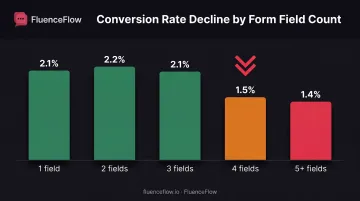
Form length matters most once you pass three fields. Omnisend's research measured:
- 1 field (email only): 2.1% conversion
- 2 fields: 2.2%
- 3 fields: 2.1%
- 4 fields: 1.5%
- 5+ fields: 1.4%
The sharp decline begins at four fields. If you need additional information, use multi-step forms (2.3% conversion) where each step feels less demanding.
Design for Mobile First
Smartphones generated nearly 80% of worldwide retail site visits in 2025. Mobile-optimized pop-ups converted at 2.2%, while desktop-only formats managed just 1.4%, a 57% difference.
Mobile optimization requirements:
- Maximum 90% of screen width
- Readable fonts (minimum 14px)
- Large, tappable close button
- Fast load times (under 2 seconds)
- No horizontal scrolling
Time Pop-Ups Strategically
Never show pop-ups immediately on page load. Omnisend found that 6-10 second delays converted at 2.4%, versus 1.9% for immediate display, a 26% improvement.
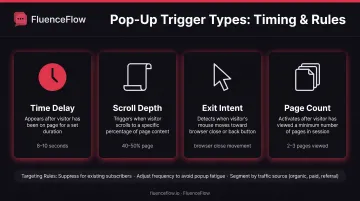
Effective triggers:
- Time delay: 8-10 seconds for standard pages
- Scroll depth: 40-50% for content-heavy pages
- Exit intent: When cursor moves toward browser close button
- Page count: After viewing 2-3 pages
Targeting rules:
- Suppress for returning subscribers (why ask twice?)
- Adjust frequency (once per visitor, not once per session)
- Segment by traffic source (different messages for paid vs. organic)
Write Compelling CTA Copy
Button text matters. Compare:
- Generic: "Submit," "Sign Up," "Join"
- Value-focused: "Claim 15% Off," "Get My Discount," "Send My Guide"
The second set emphasizes what the visitor receives, not what they're giving up.
How to Choose the Right Pop-Up Strategy for Your Store
Match Pop-Up Type to Business Model
High AOV / Low Frequency Brands (premium products, long decision cycles):
- Focus: Email capture with segmentation questions
- Offer strategy: Skip heavy discounts; lead with free shipping, financing, or exclusive content
- Example: Sartoro's $102 value offer paired with occasion-based segmentation
Mid AOV / Mid Frequency Brands (large catalogs, seasonal products):
- Focus: Product recommendation pop-ups and survey-based capture
- Offer strategy: Promote bestsellers and high-margin items
- Example: Flavor or style preference questions that guide product discovery
Low AOV / High Frequency Brands (consumables, CPG):
- Focus: Aggressive first-order conversion and gamification
- Offer strategy: 10-15% discounts to secure the first order, then shift to replenishment flows
- Example: Carroll's Corn's 10% off plus flavor selection
Calculate Sustainable Offers
Don't guess. Base your incentive on actual unit economics:
- Calculate customer lifetime value (LTV): Average order value × purchase frequency × customer lifespan
- Determine acceptable first-order cost: If LTV is $300 and you can break even on acquisition, fund the first-order discount from your gross margin on that order
- Test variations: Run A/B tests between 10%, 15%, and 20% off, or test percentage discounts against dollar amounts ($10 off vs. 10% off)
Integrate With Email and SMS Marketing
A sustainable offer only pays off if new subscribers enter the right lifecycle. Connect pop-ups directly to your ESP (such as Klaviyo) so every capture triggers automated flows:
Essential integrations:
- Welcome series: 3-5 emails introducing brand, bestsellers, and social proof
- Abandoned cart recovery: Triggered when subscribers add to cart but don't purchase
- Post-purchase flows: Thank you, review requests, cross-sells
- Replenishment sequences: Timed to product usage for consumables
FluenceFlow clients average 41% of total store revenue from email and SMS combined. Flows typically drive 30-60% of email revenue; campaigns contribute 40-70%. That split only holds when the list is built from well-targeted pop-ups.
Conclusion
The most effective website pop-ups balance value for the visitor with value for the business. They capture leads, drive sales, and improve customer experience by delivering relevant offers at the right moment. Done well, they solve a real problem for the shopper and open a relationship you can build on.
Start with one pop-up type that addresses your biggest opportunity:
- Email list growth if you're building from scratch
- Cart abandonment if you're losing 70%+ of added-to-cart visitors
- Product recommendations if your catalog overwhelms first-time shoppers
Test, measure, and refine based on what the data shows.
Retention marketing agencies like FluenceFlow help DTC brands design pop-up strategies that feed high-converting email and SMS flows. Every captured subscriber joins a system built to drive repeat revenue, not sit idle on a list.
Frequently Asked Questions
What is a website pop-up?
A website pop-up is an overlay window that appears on a webpage to capture visitor attention and drive a specific action, typically email or SMS signup in exchange for a discount, content, or other value. Modern pop-ups use behavioral triggers and targeting rather than interrupting every visitor immediately.
What are some examples of website pop-ups?
Common types include email-capture overlays, exit-intent pop-ups, spin-to-win wheels, product recommendation overlays, and preference surveys. Each type maps to a different goal, from list growth to cart recovery and personalization.
What are some good or creative examples of website pop-ups?
Creative formats often beat generic discount overlays. Examples include Faguo's spin-to-win wheel (3.5% conversion), Kosmo's Q's two-step micro-commitment ("Would you like a discount?" before the email field), and Caden Lane's buyer-stage question (expected baby, newborn, or older child).
How can I tell if a pop-up ad is legitimate?
Legitimate pop-ups match the website's branding and design, appear within the actual website (not as a separate browser window), include a clearly visible close button, and request only reasonable information like email or phone number. They also include privacy policy links and transparent language about how data will be used.
What makes a pop-up convert well?
High-converting pop-ups lead with a specific offer, keep forms to 1–2 fields, and use clear CTAs with readable design. Timing and targeting matter too: a 6–10 second delay or exit intent, plus segment-specific messages, usually outperform one generic overlay for everyone.
How do I integrate pop-ups with my email marketing platform?
Most pop-up tools, including Klaviyo's native forms, Justuno, and Wisepops, connect to email platforms through native integrations or APIs. New signups flow into the right lists or segments and can trigger welcome flows without manual import or export.